Four on the Floor: A show at Grizzly Grizzly Written By William Toney
Four on the Floor: A show at Grizzly Grizzly
As you enter Grizzly Grizzly’s Four on the Floor, you are transported to the dark dance floor of a club or rave. The exhibition captures the atmosphere of nightlife spaces, where sound and visuals blend to create immersive, collective experiences. These gatherings intervene in built environments, sometimes occupying them illicitly. Over extended stretches of time, high-volume electronic music, heavy bass, and layered visuals build toward sensory overload, generating space for experimental congregation. While clubs are commercial venues designed for late-night entertainment, raves are more underground and off the grid, unfolding out of view from authority. Often, events take up a space that merges and challenges a formal structure of gathering.
Within these environments, the dance floor becomes a site for multitudes of potential interactions. It is inside this coming together – under the guise of dancing to the DJ – that radical formations of community are enacted. New connections form, relationships deepen, and space opens, allowing for discrete dissociation to take place. Between spotlight and total darkness, one can find comfort in a new expression of identity. A whisper in the ear could be the basis of a revolution, amidst the overbearing bass we can devise a plan of action. There are endless possibilities.
Applying different methods of abstraction, the artists in Grizzly Grizzly's show, Four on the Floor, curated by Diedra Krieger, consider the dancefloor a site for liberation. The exhibition focuses on social structures and political landscapes as they intersect with fashionable dancing bodies. Works by Kim Miller and Zach Hill consider the body and invite the viewer to become an active participant. They also explore different modes of planning via choreography, mapping, and constructing. Here, we are confronted with the club as a place of reverie and a site where careful considerations of meaning are constructed.
One of the unifying factors throughout the exhibition is the consideration of the grid and the screen. In nightlife spaces, one of the more ubiquitous images in our mind is the checkered dance floor. While visually stimulating, the grid of the dance floor offers a grounding, formal quality that implies a structure. The grid can get the party started – ad infinitum.
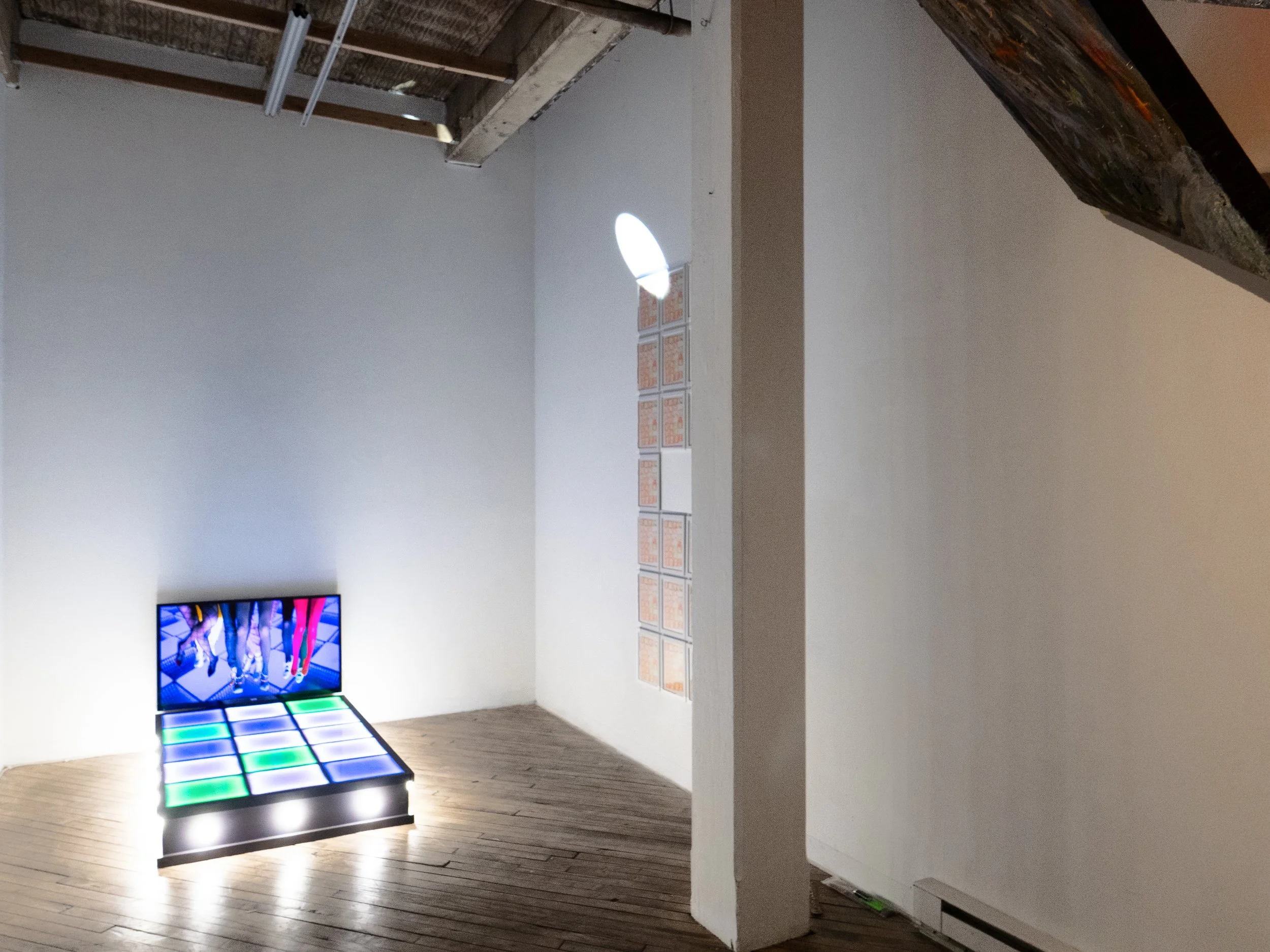
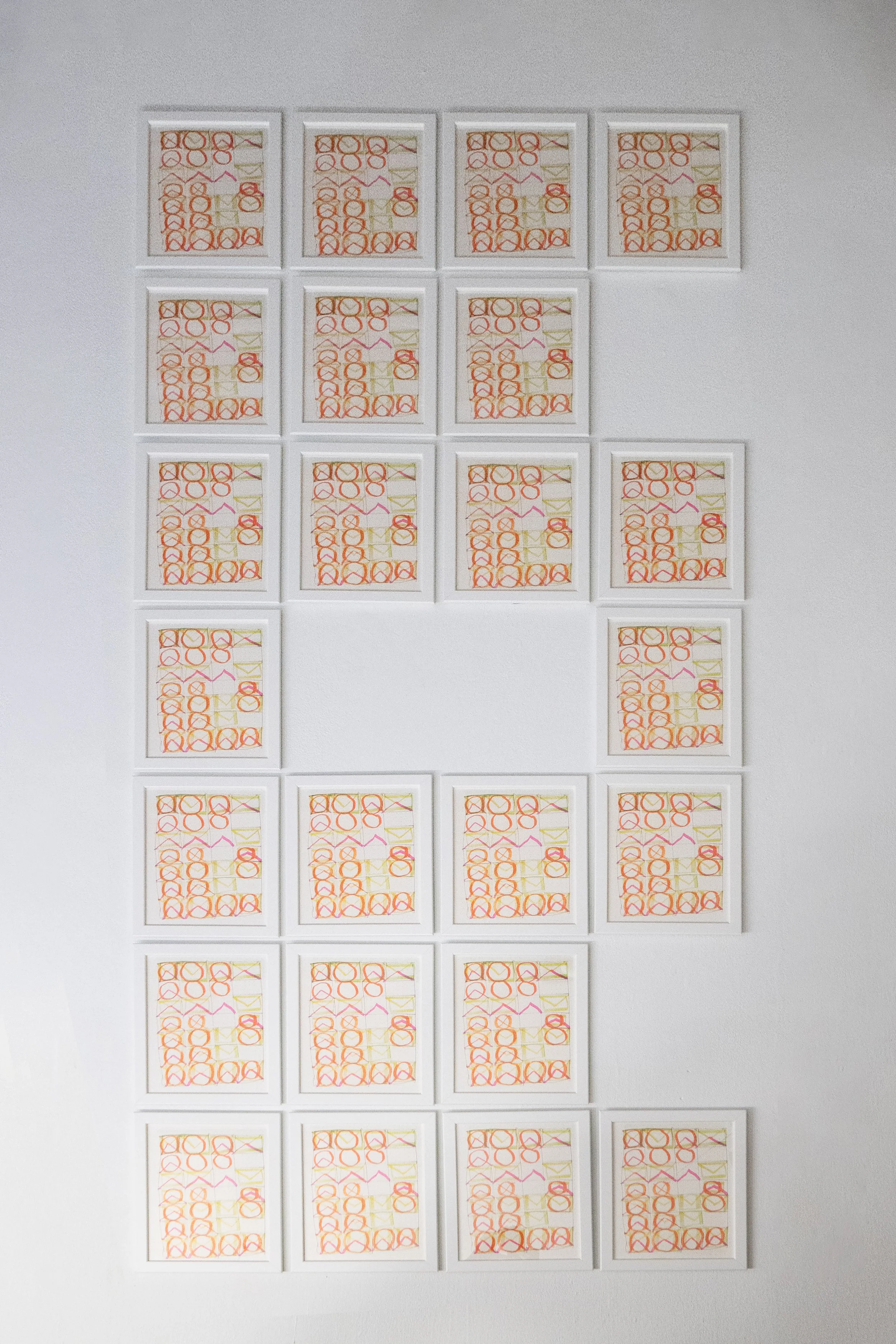
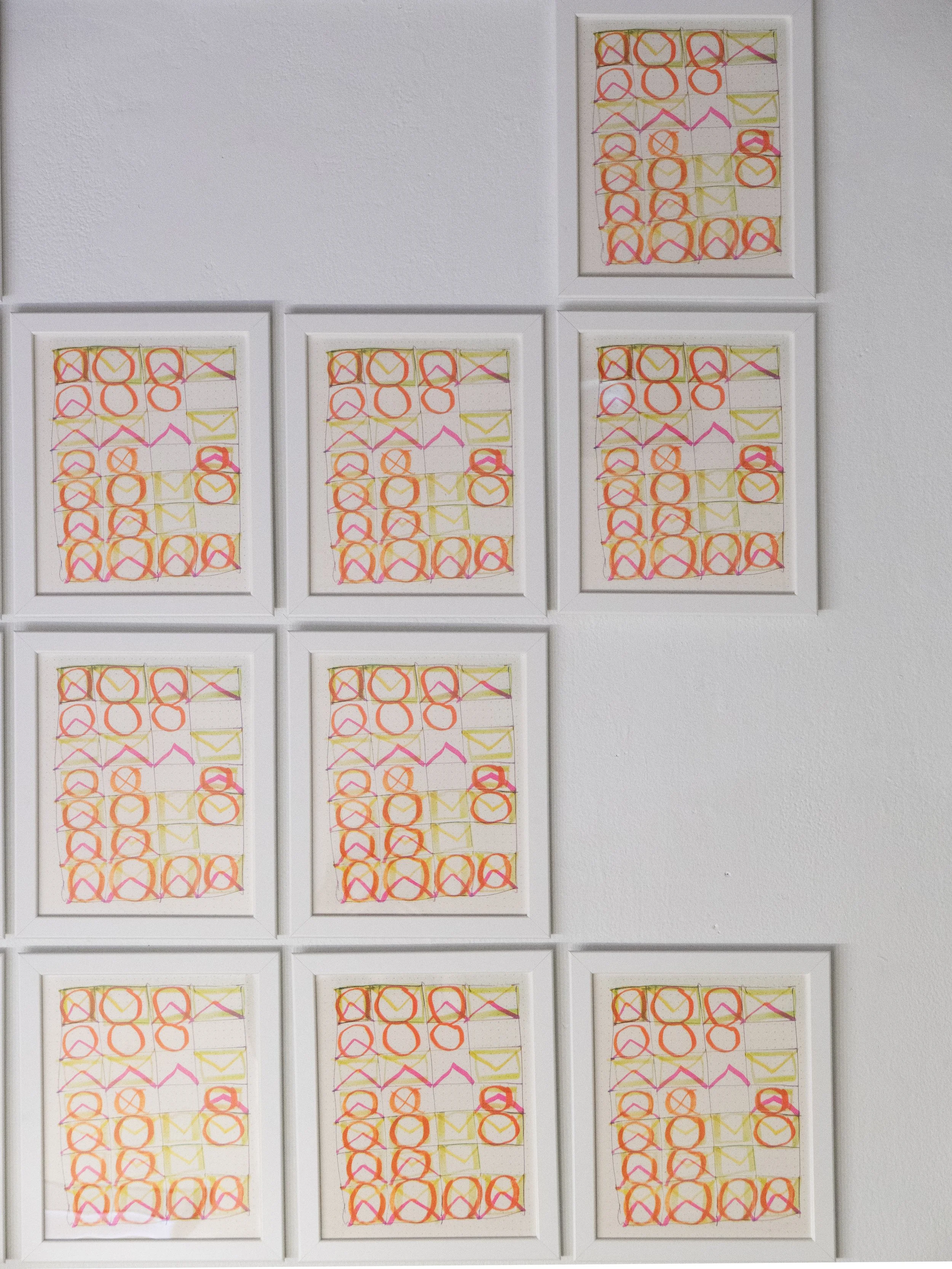
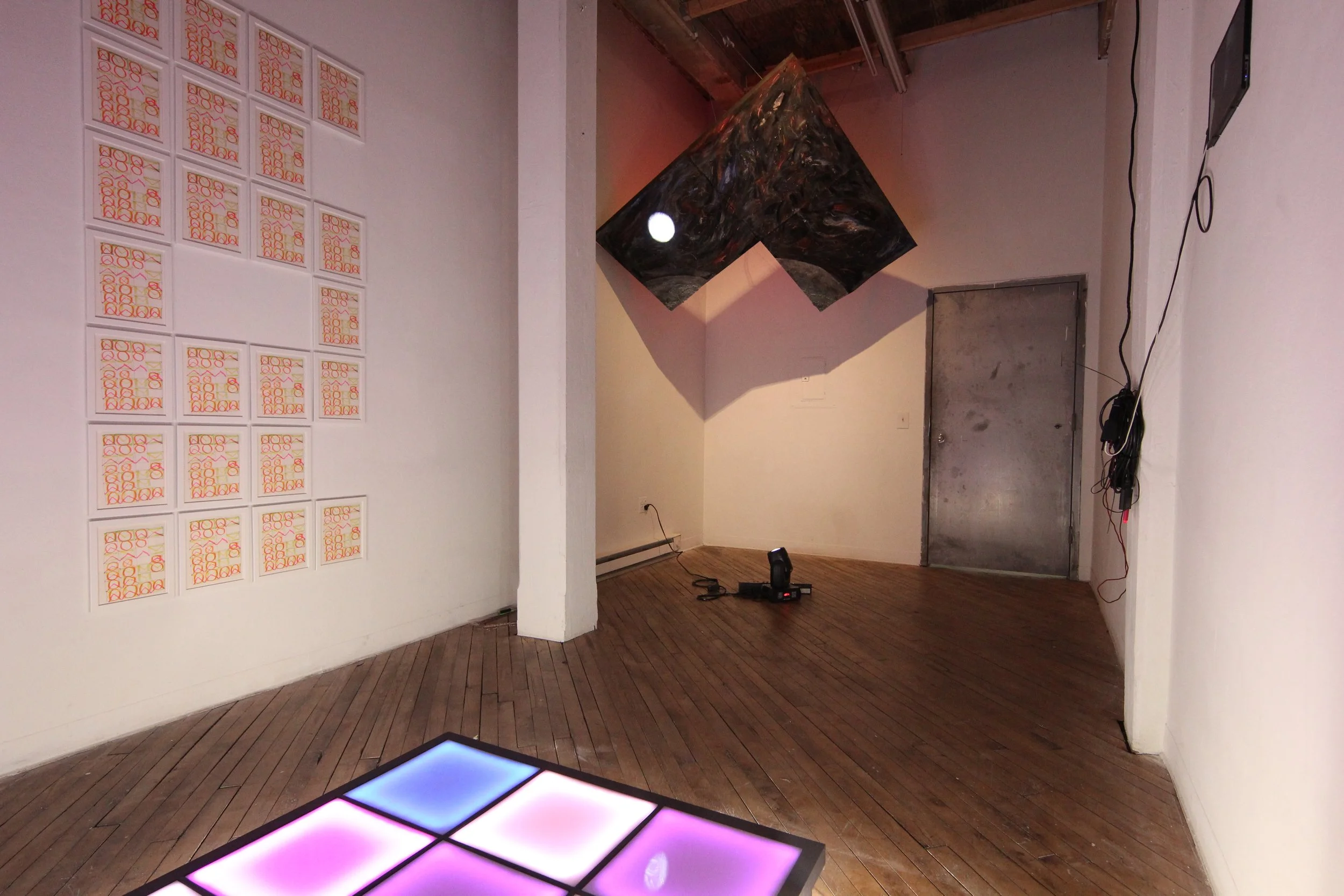
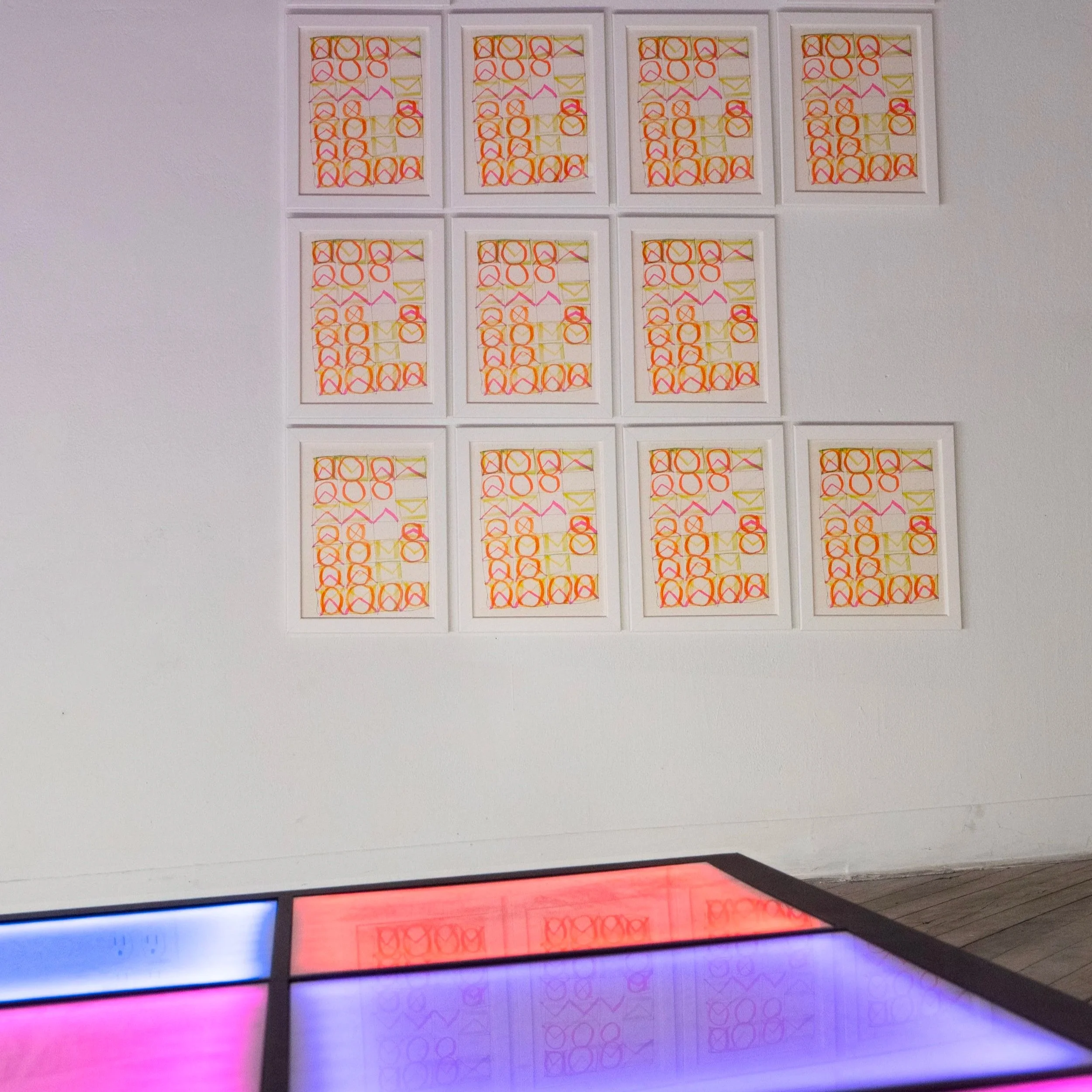
Kim Miller's works in Four on the Floor are grounded in her interest in community. Her studies of Social Choreography is the framework that considers organizing people in time and space as a tool for creating opportunities that can lead to a mutual creation of meaningful world-building. The somewhat utopian ideal focuses on the group as an interconnected network of potential outcomes. Some of this choreography takes place in the form of organizing groups of people in ways that challenge capitalist formations of bodies in space and time. Miller illustrates some of these concepts in her diagrammatic drawings titled Scores for Social Choreography, April 3-27, 2026, that map movements and gestures. The drawings are presented in a framed grid; however, the grid is not complete. The gaps in the grid embody new possible diagrams.
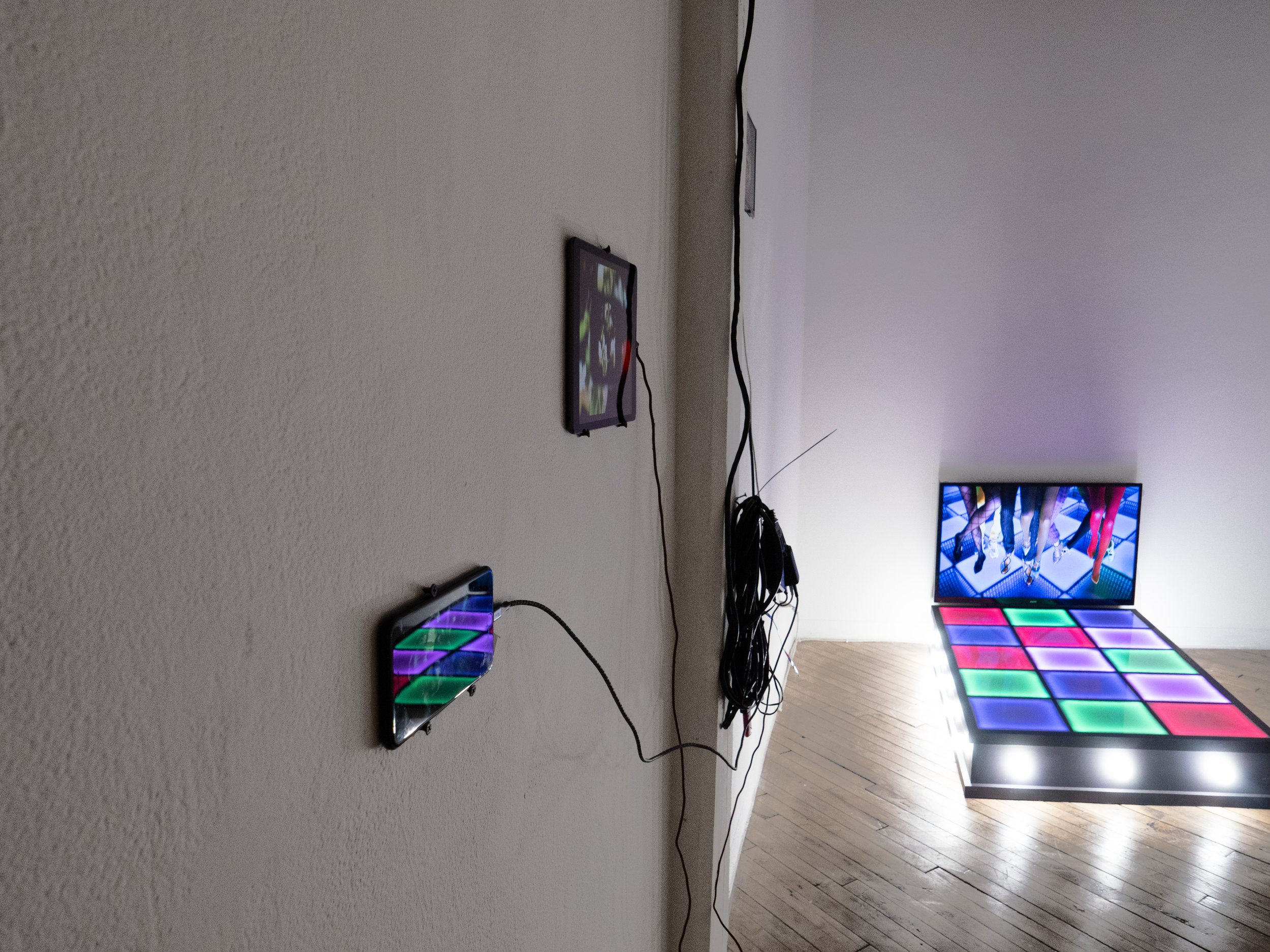
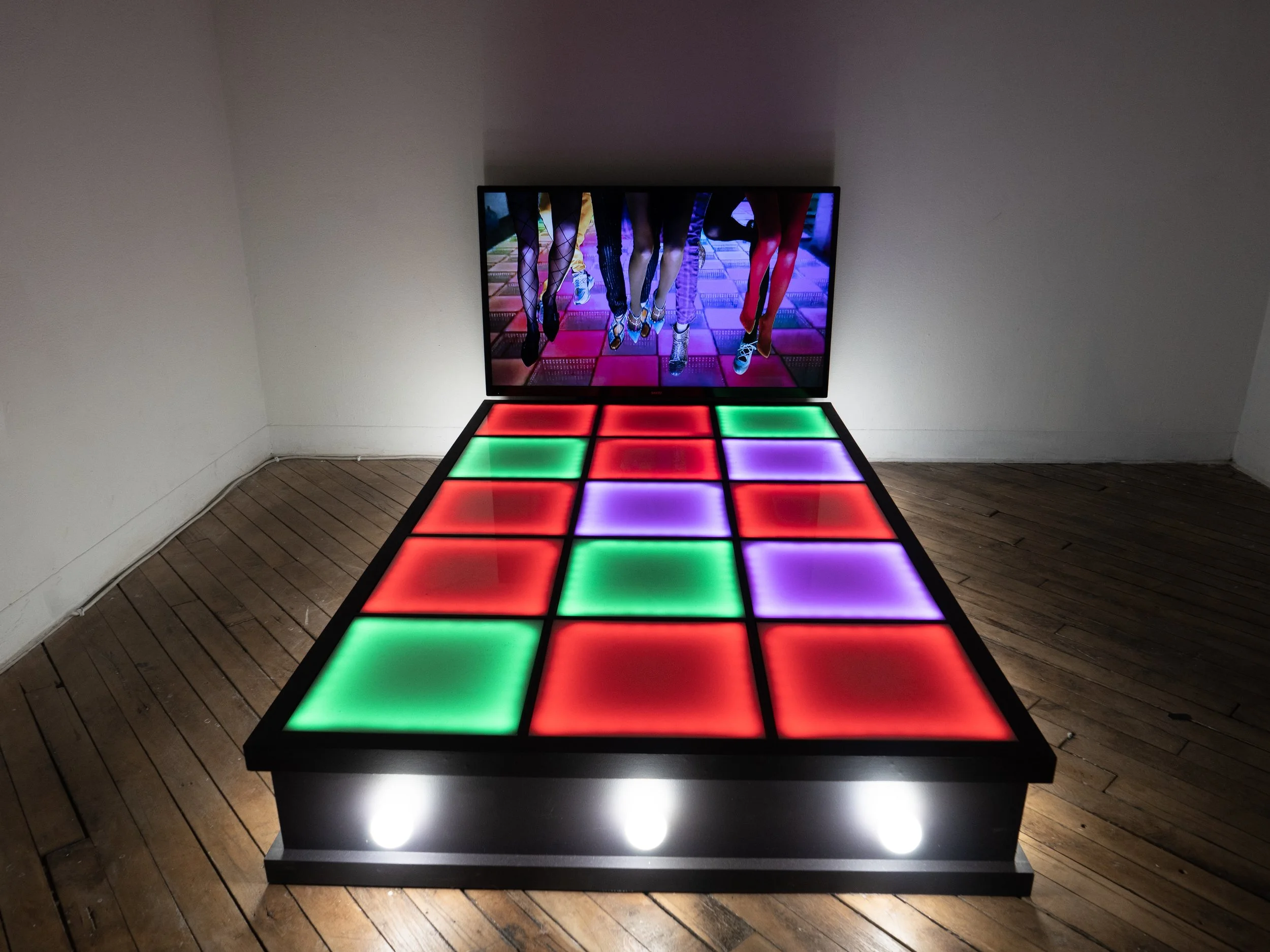
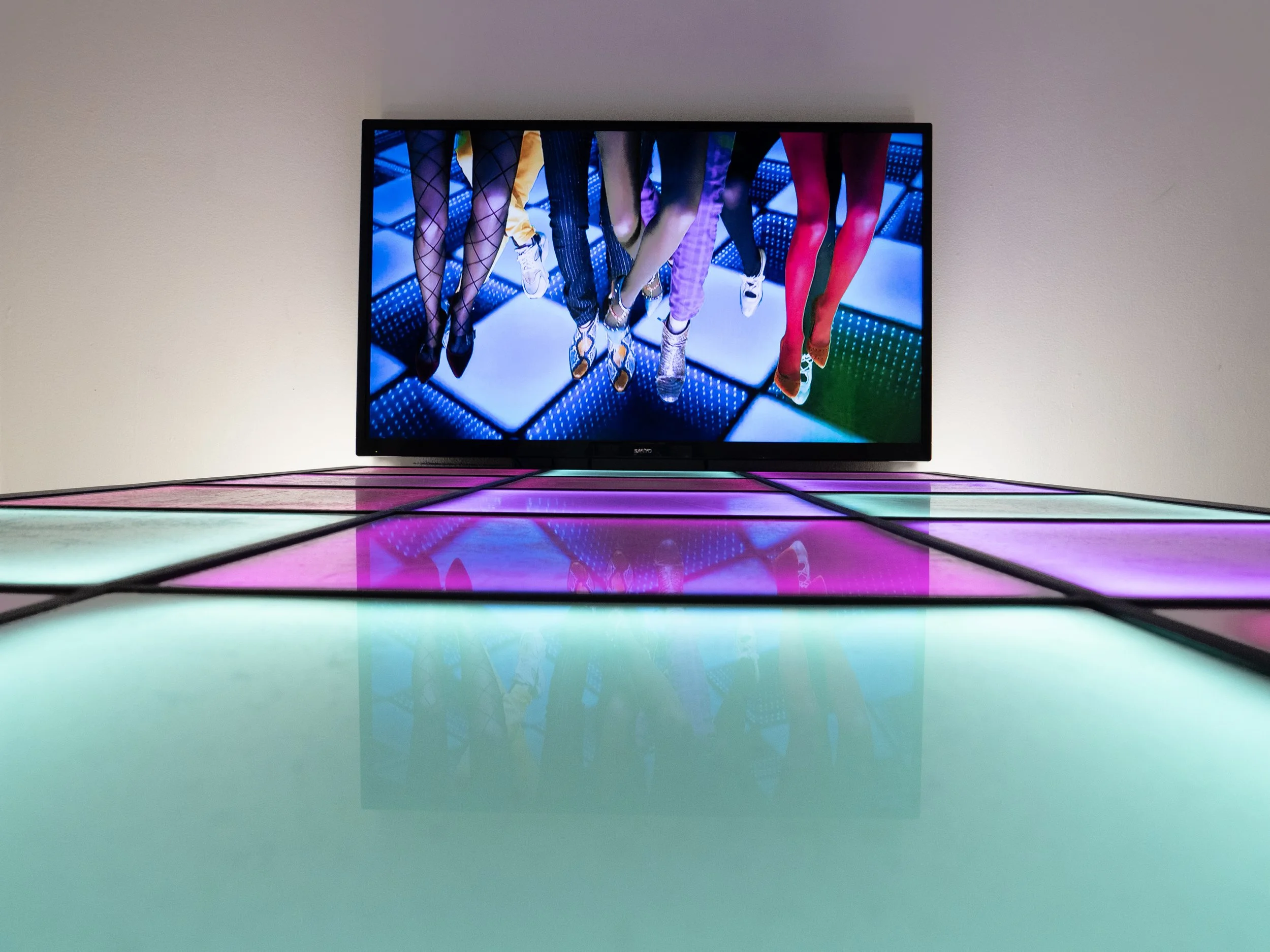
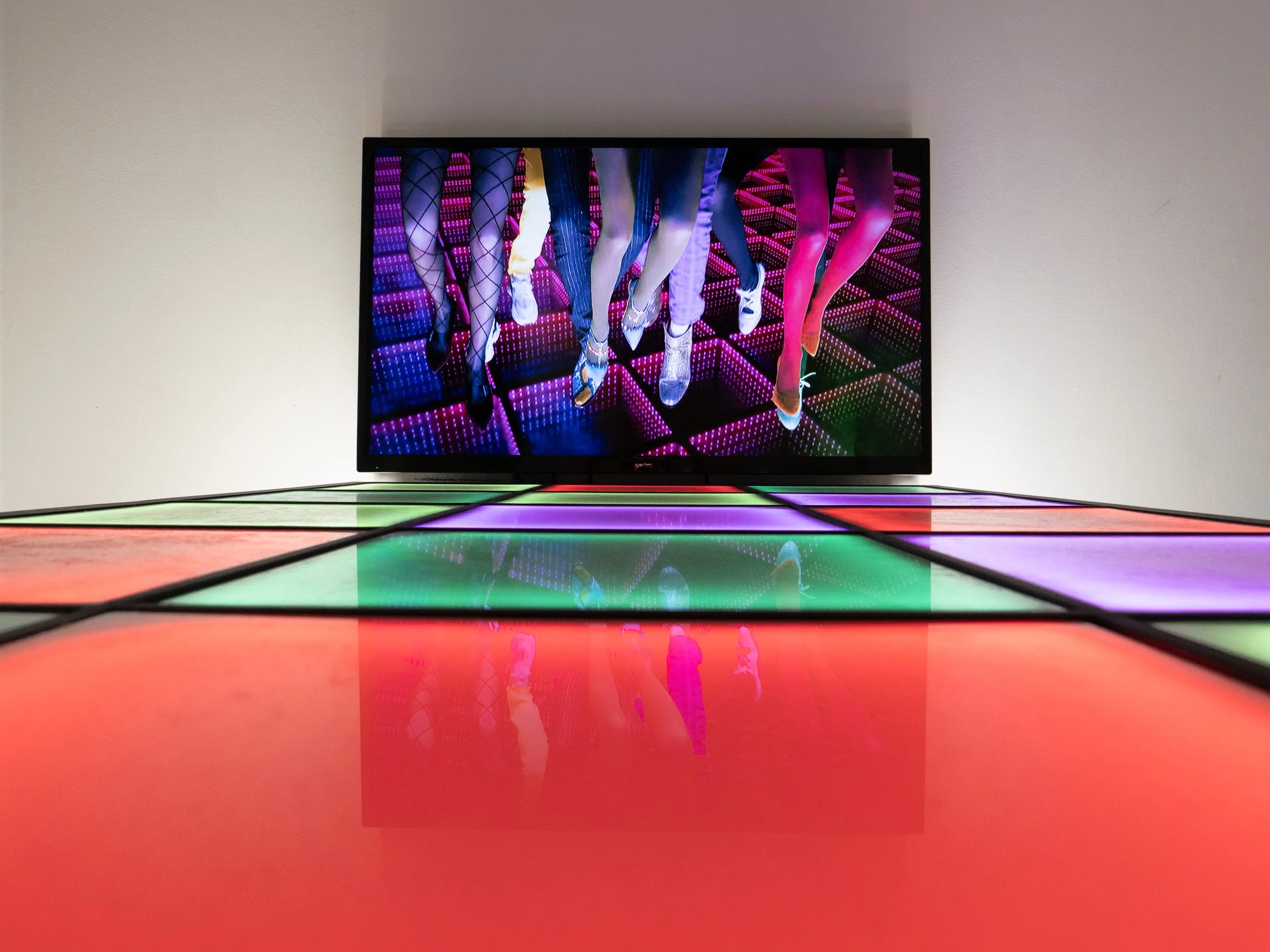
Miller’s L.E.G.S. [Light Emitting Glow System], 2025, accompanied with Social Choreography Apparatus #4, 2026, create a tableau of a nightclub. Placed together, the two works invite you to come closer and imagine yourself on the dancefloor. As you enter the gallery, you encounter a tiled floor, lit by LEDs, emanating a fluorescent glow. The surrounding incandescent bulbs define the boundaries of the stage-like structure. Above the dancefloor, a monitor displays L.E.G.S. [Light Emitting Glow System], 2025, a video of disembodied feet hovering slightly above a dance floor, moving in an off-kilter unison. The dance Miller is referring to is known as the "Milwaukee Step." The ‘steppers’ on the screen are performing a variation of a house music dance that has been passed down through generations. The Step gets modified from region to region and develops into different styles. Putting your own spin on the dance comes after understanding the formal structure.
Projections, screens, and lighting design also contribute to the timbre of the club's sonic environment. The brightness, dimness, and pace of the flickering visuals set the tone for the night at hand. Zach Hill’s pieces in Four on the Floor are a dialogue between past and present, he references his own experiences as a partygoer, community builder, and artist. By reusing and repurposing discarded materials from previous parties, Hill questions when objects are no longer useful. The works are interested in serving a new purpose. Though ephemeral, Hill’s works offer an archival trace, giving remnants and glimpses of parties that have already come and gone.
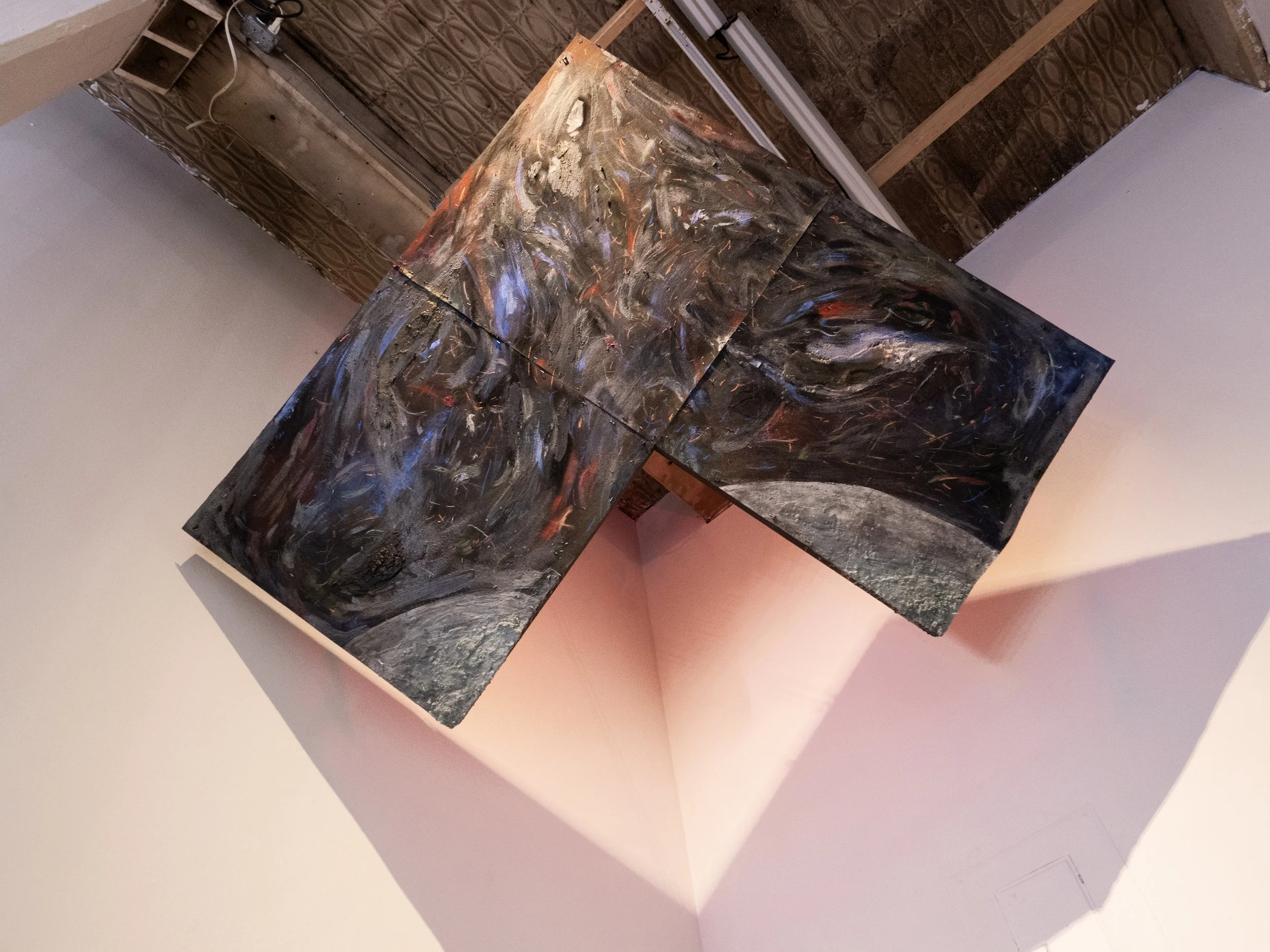
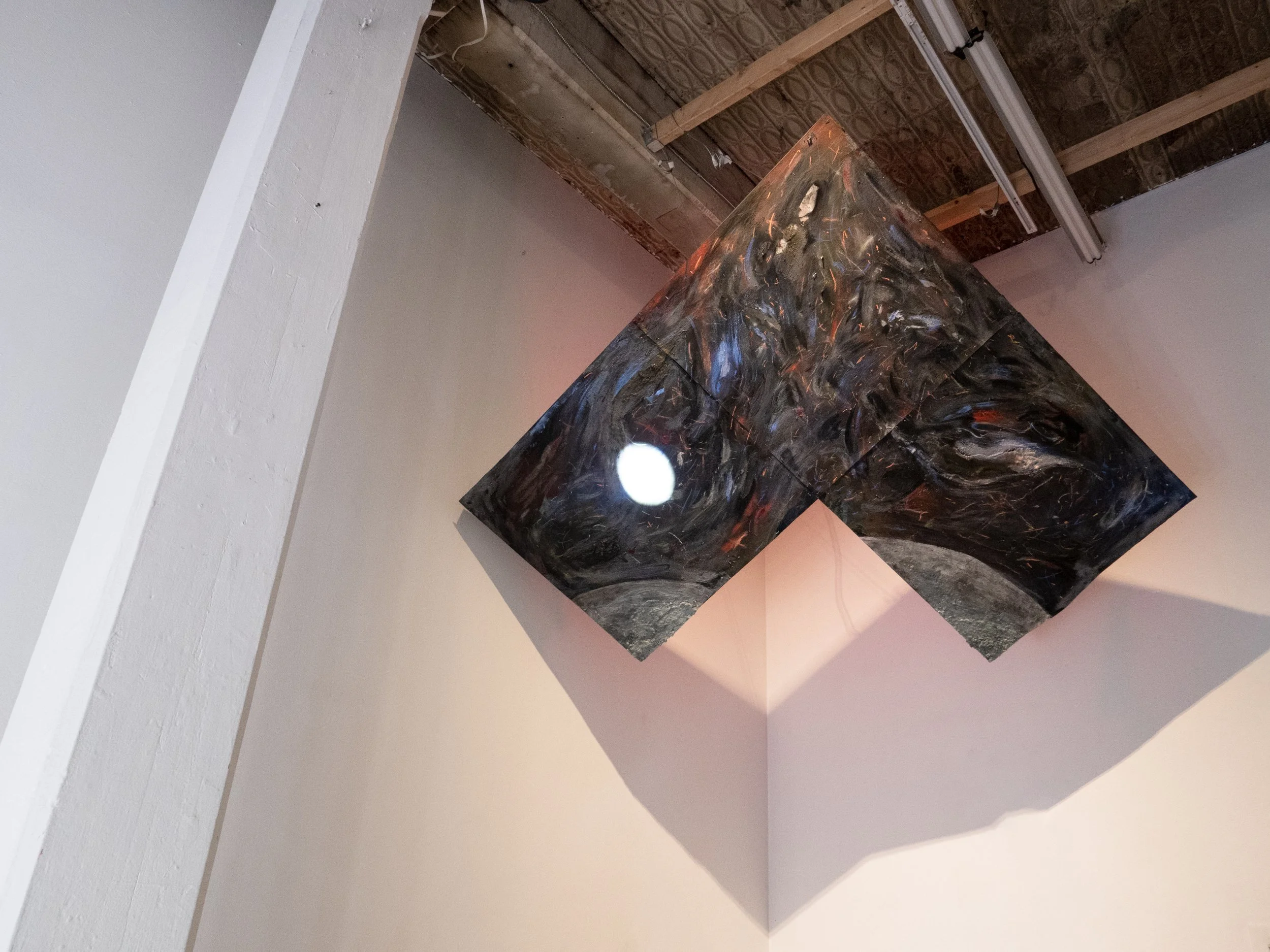
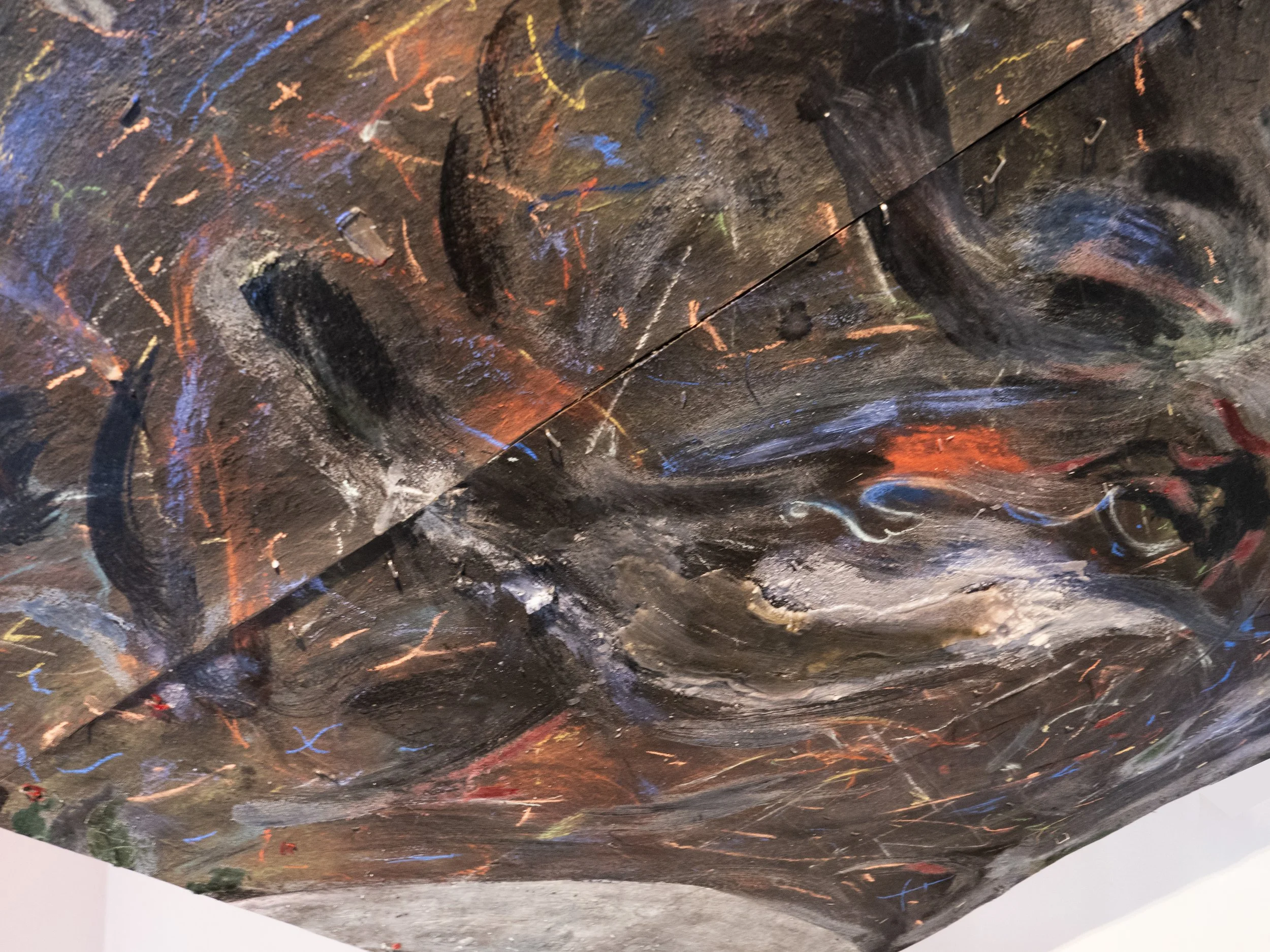
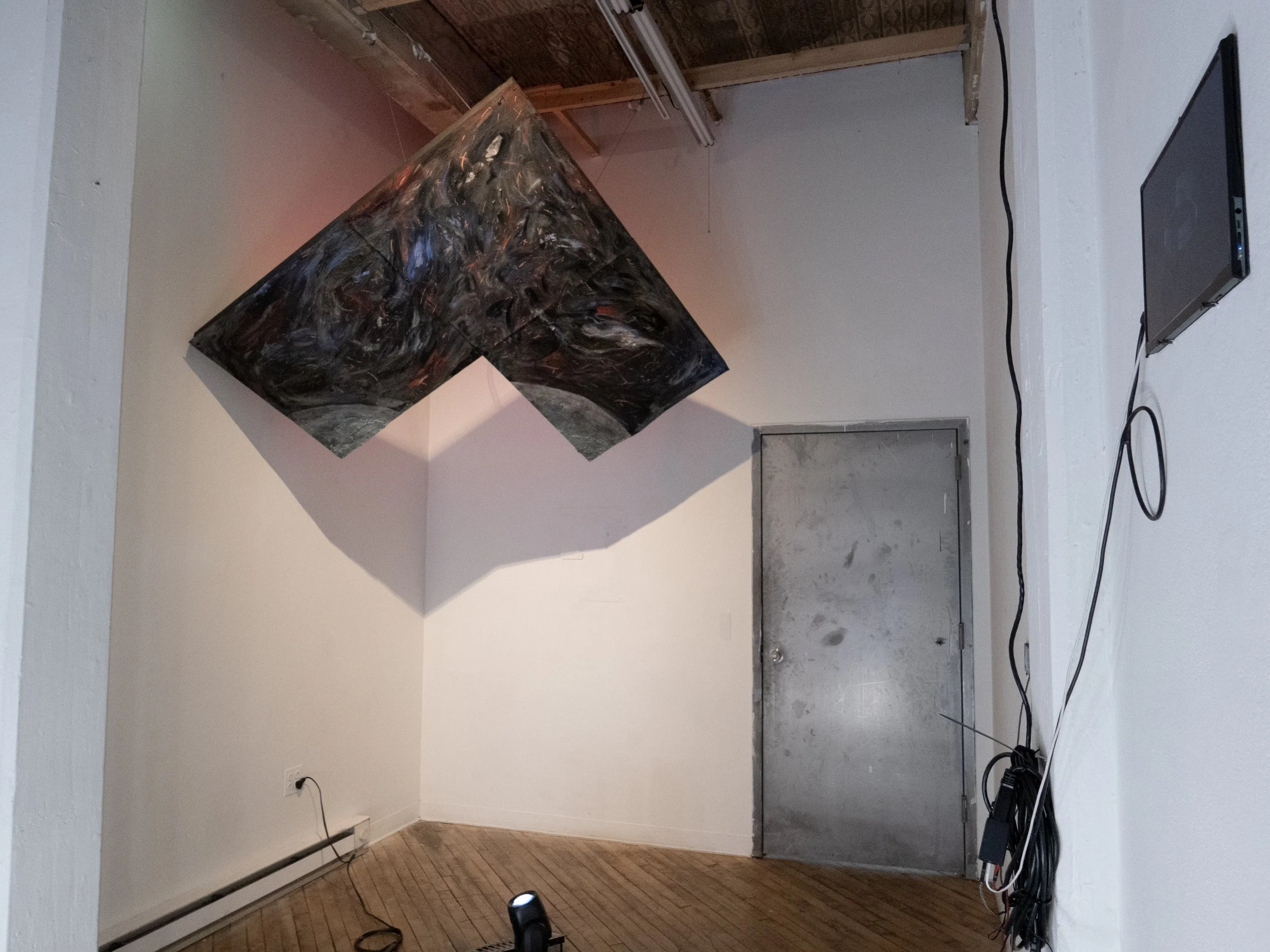
Up Scuffed Corner, 2026, is a mixed-media installation that activates a corner of the gallery. Tar paper, once used for its light-absorbing quality, has been reused as a canvas. Painted in abstract marks and blacklist with a purplish glow, three panels of tar paper create a grid-like structure, suspended in the top corner. Beneath it, a party light plugged into a DMX controller casts a roaming beam of light that scans the painting and the surrounding architecture.
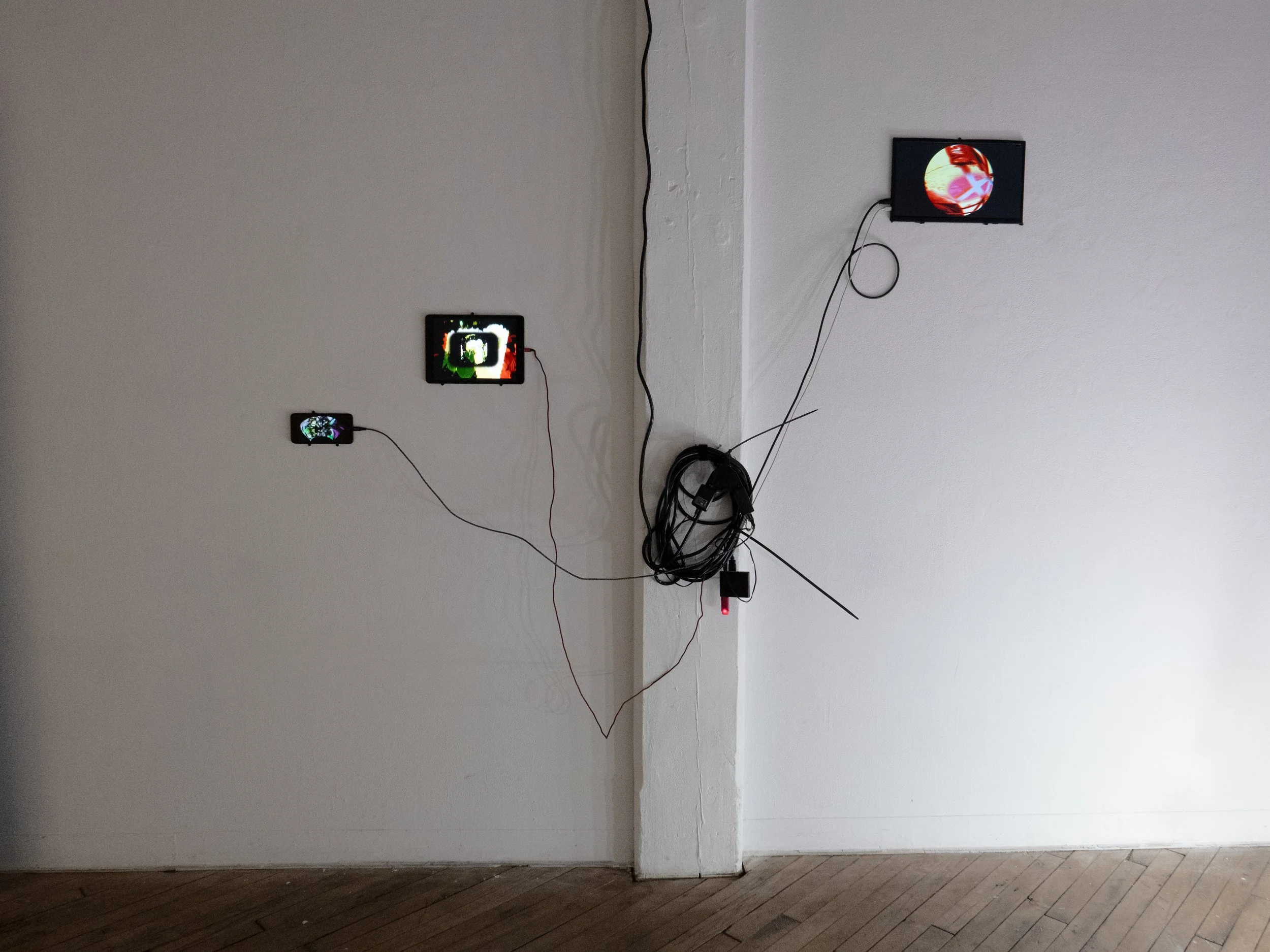
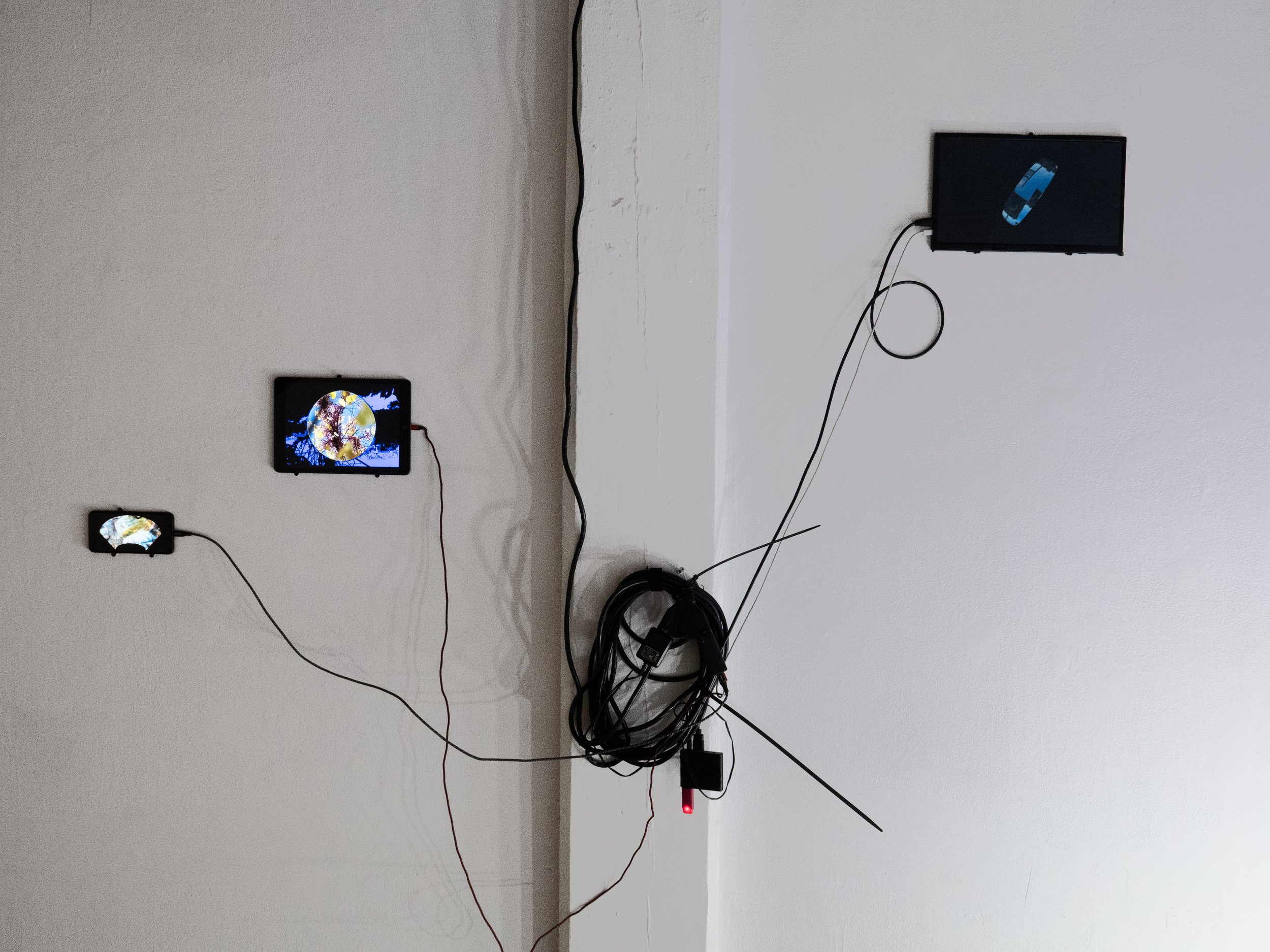
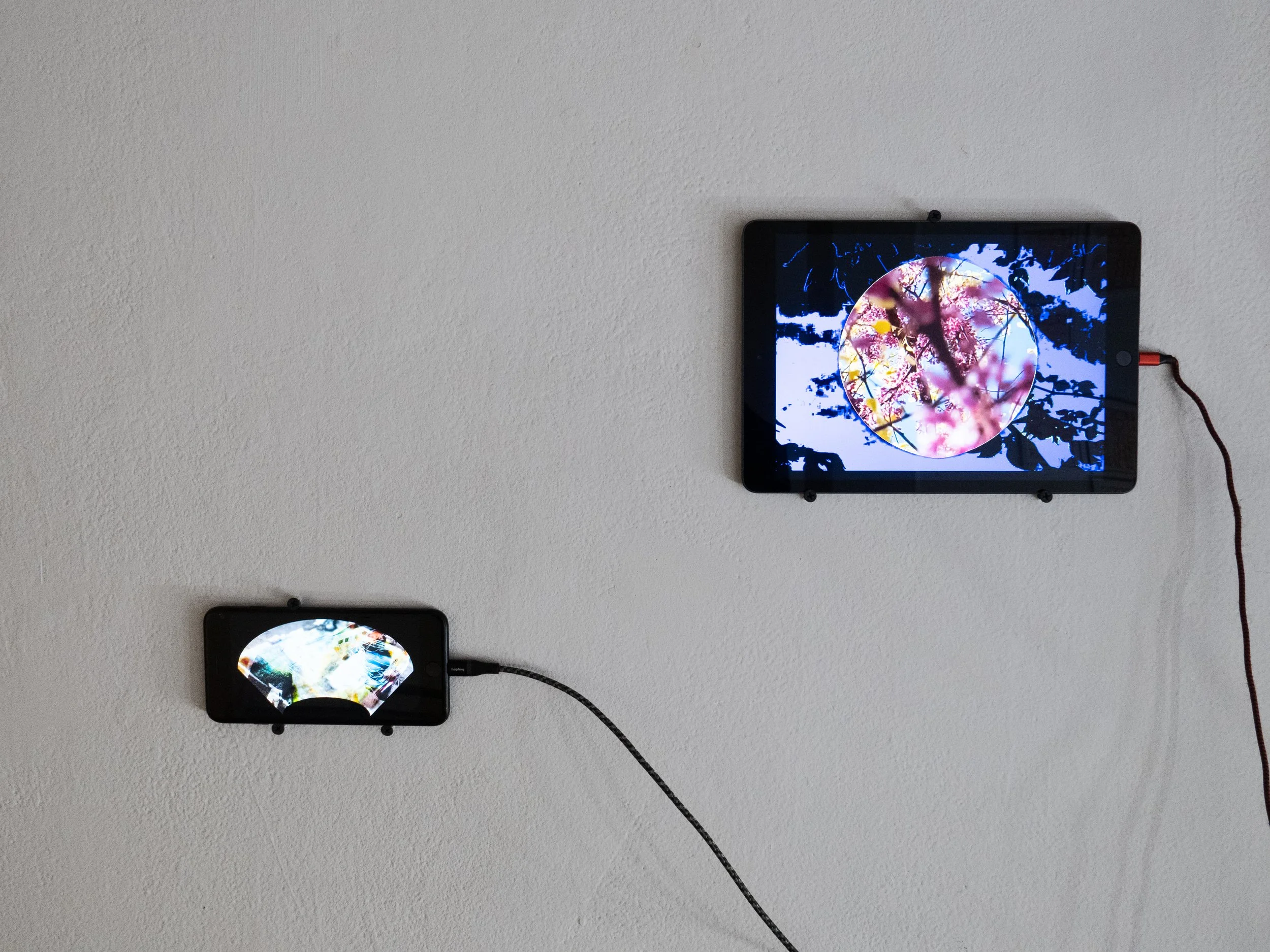
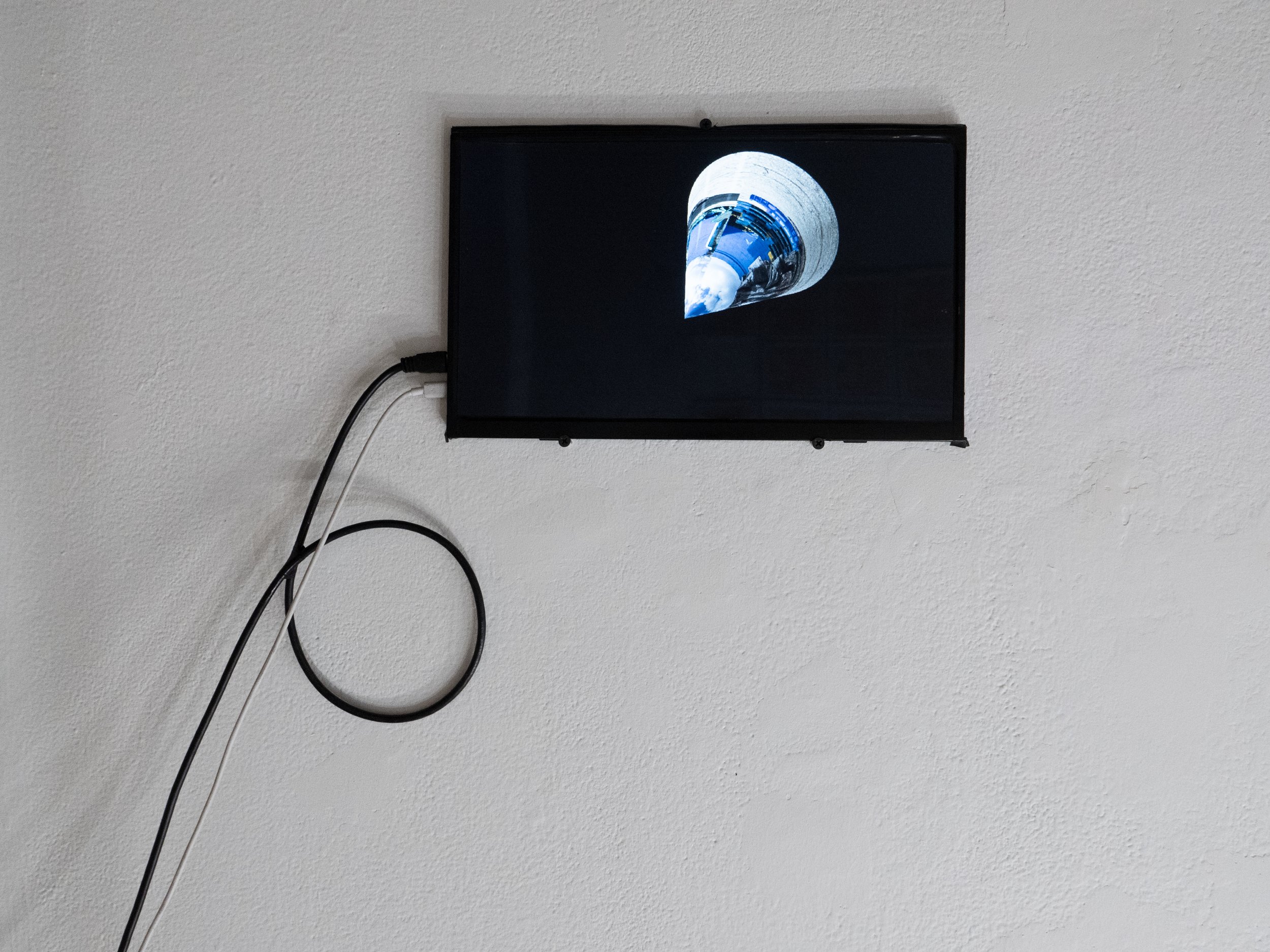
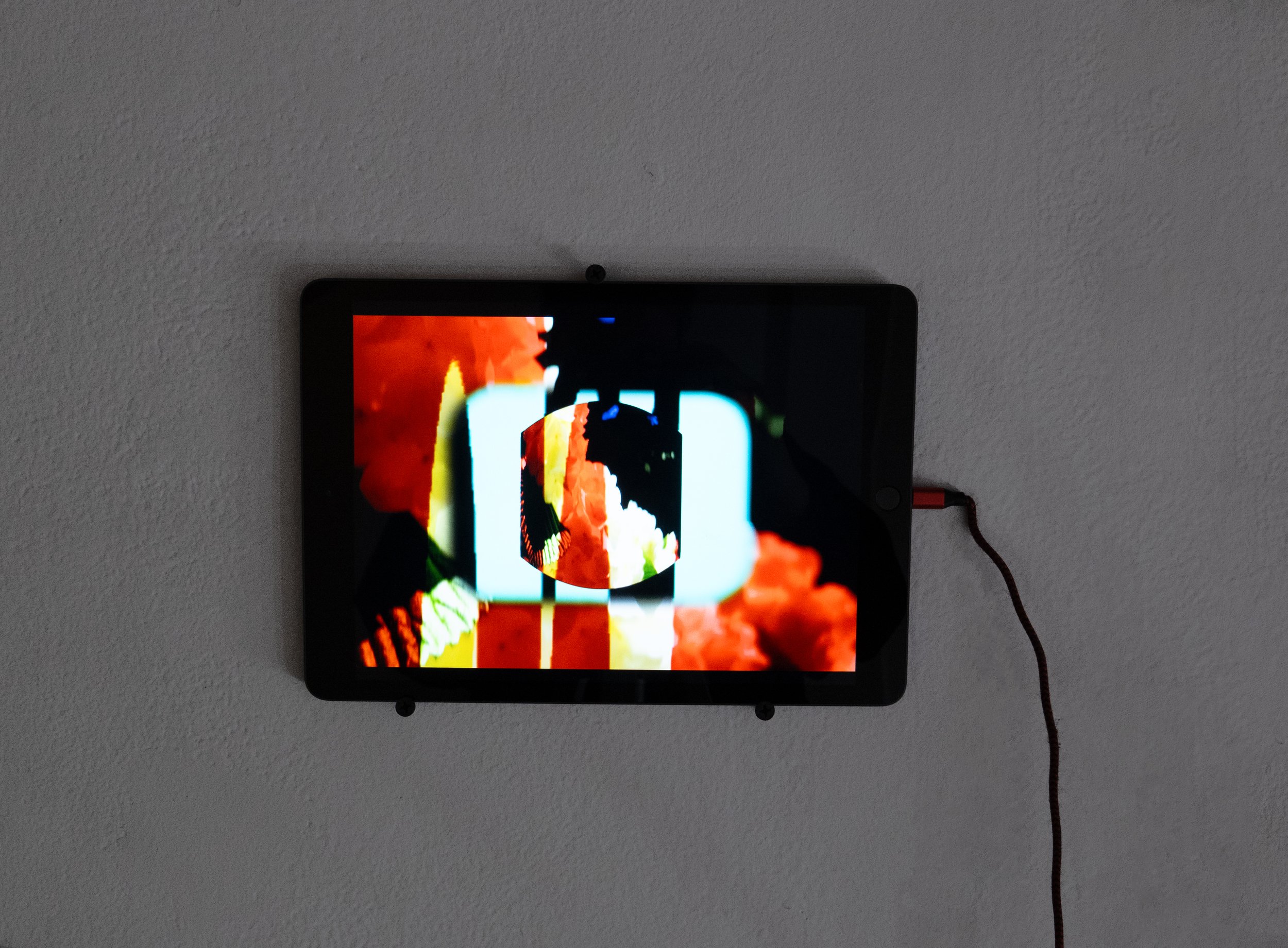
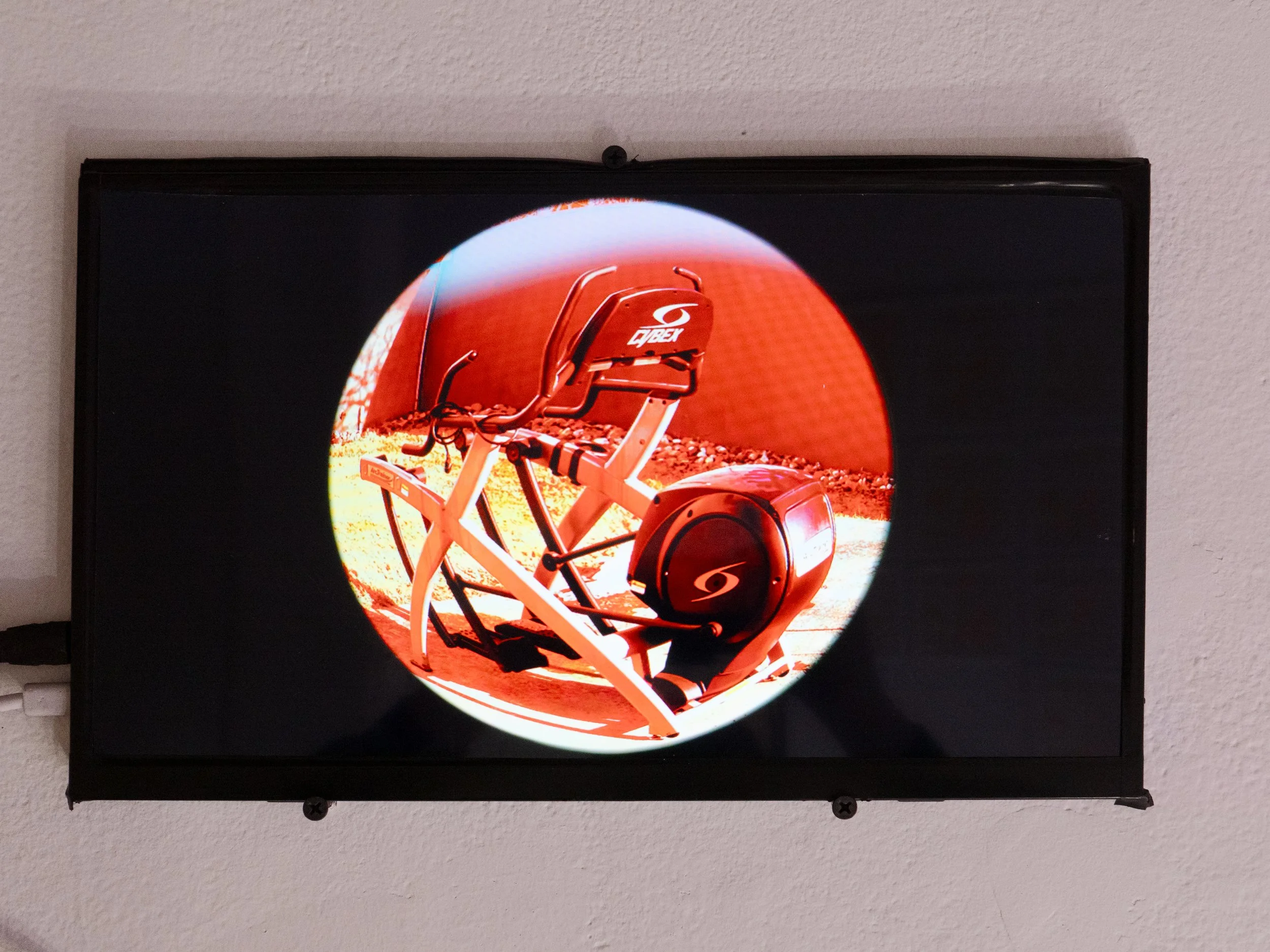
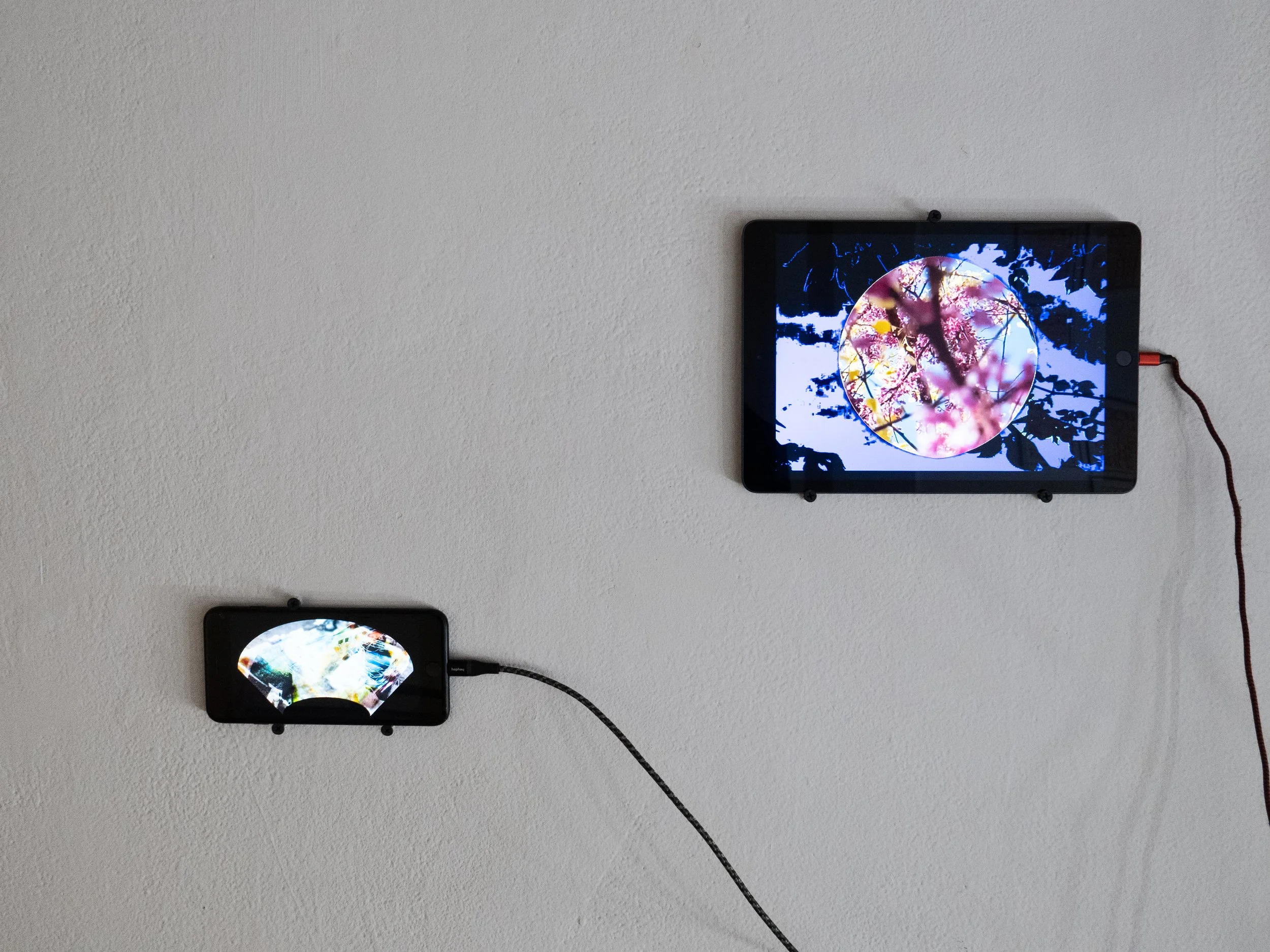
Hill also contributed visuals for his collaborator Vicente/Vicenta’s party series, Sonidero. In Four on the Floor, these party visuals are reinterpreted as wall pieces. Displayed on tablets and phone screens, his hypnotizing projections become gallery pieces. Blossom, 2025, a nearly 15-minute video of psychedelic flora evokes the atmosphere of an outdoor rave. It brings to mind the Japanese term, Komorebi, which describes the phenomenon of sunlight beaming through leaves and trees in a forest. This is a fleeting effect of light that can only be experienced in the moment and place where it happens.
With Four on the Floor, curator Diedra Krieger transforms Grizzly Grizzly into a site that embodies the praxis of clubbing. While raves and all-night gatherings may not appeal to everyone, Miller and Hill suggest that good things happen after midnight.
Writer’s Bio:
William Toney is an artist, educator and arts organizer from Kansas City, Missouri. Toney currently lives and works in Philadelphia, PA. He earned an M.F.A. from Tyler School of Art and Architecture at Temple University in Philadelphia, Pennsylvania, in 2024. He also holds a B.F.A. in photography from the University of Missouri–Columbia in 2012. Toney has exhibited his artwork nationally, and he has also had solo exhibitions of his work at Automat Collective in Philadelphia, PA, as well as UMKC Gallery of Art and HAW Contemporary (both based in Kansas City, Missouri). William Toney has been the recipient of several local artist residencies and fellowships, including the Makerspace Residency at Temple University and the Charlotte Street Studio Residency.