Dust Collectors: A show at Grizzly Grizzly WRITTEN BY MO MARTE
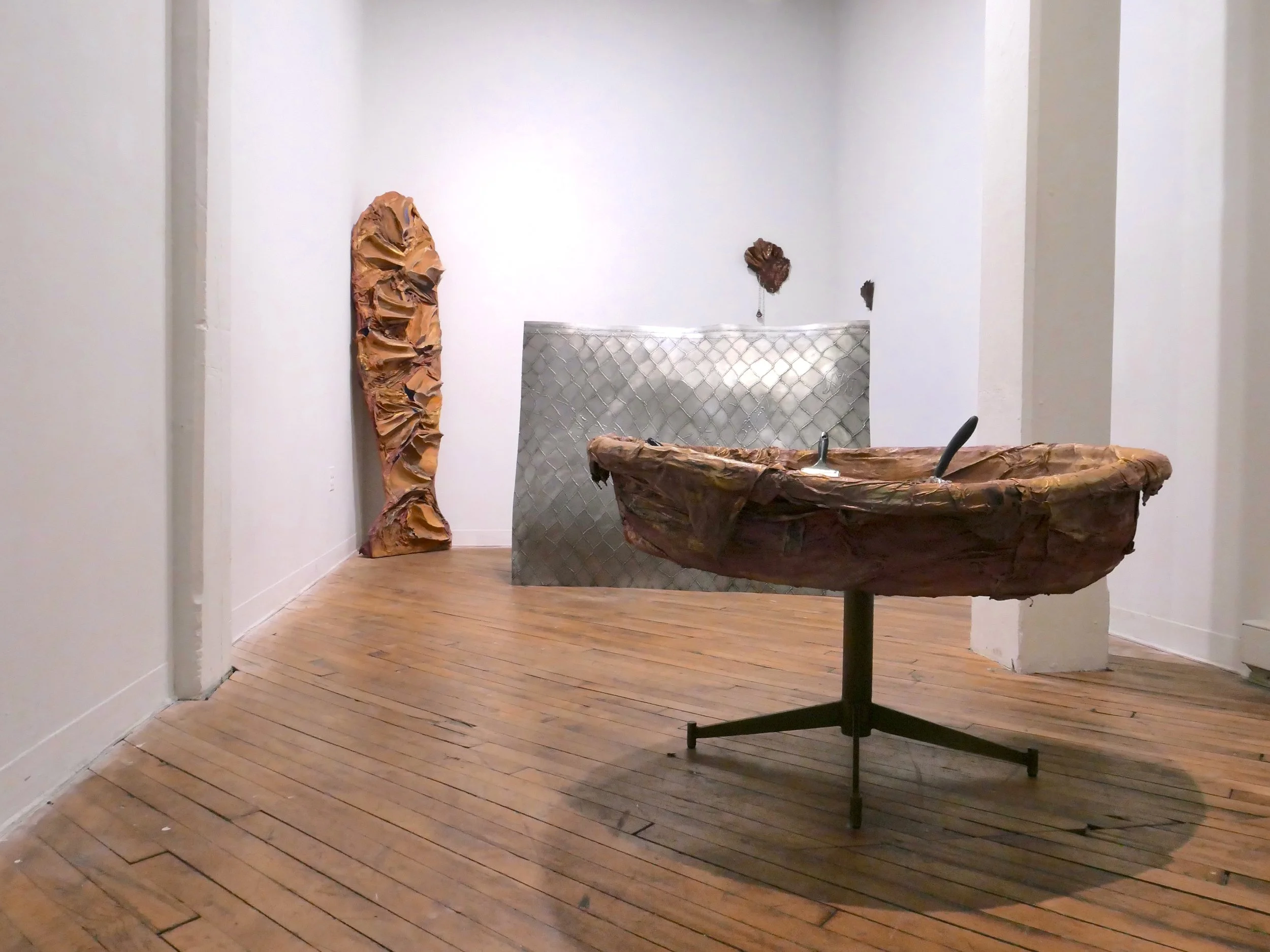
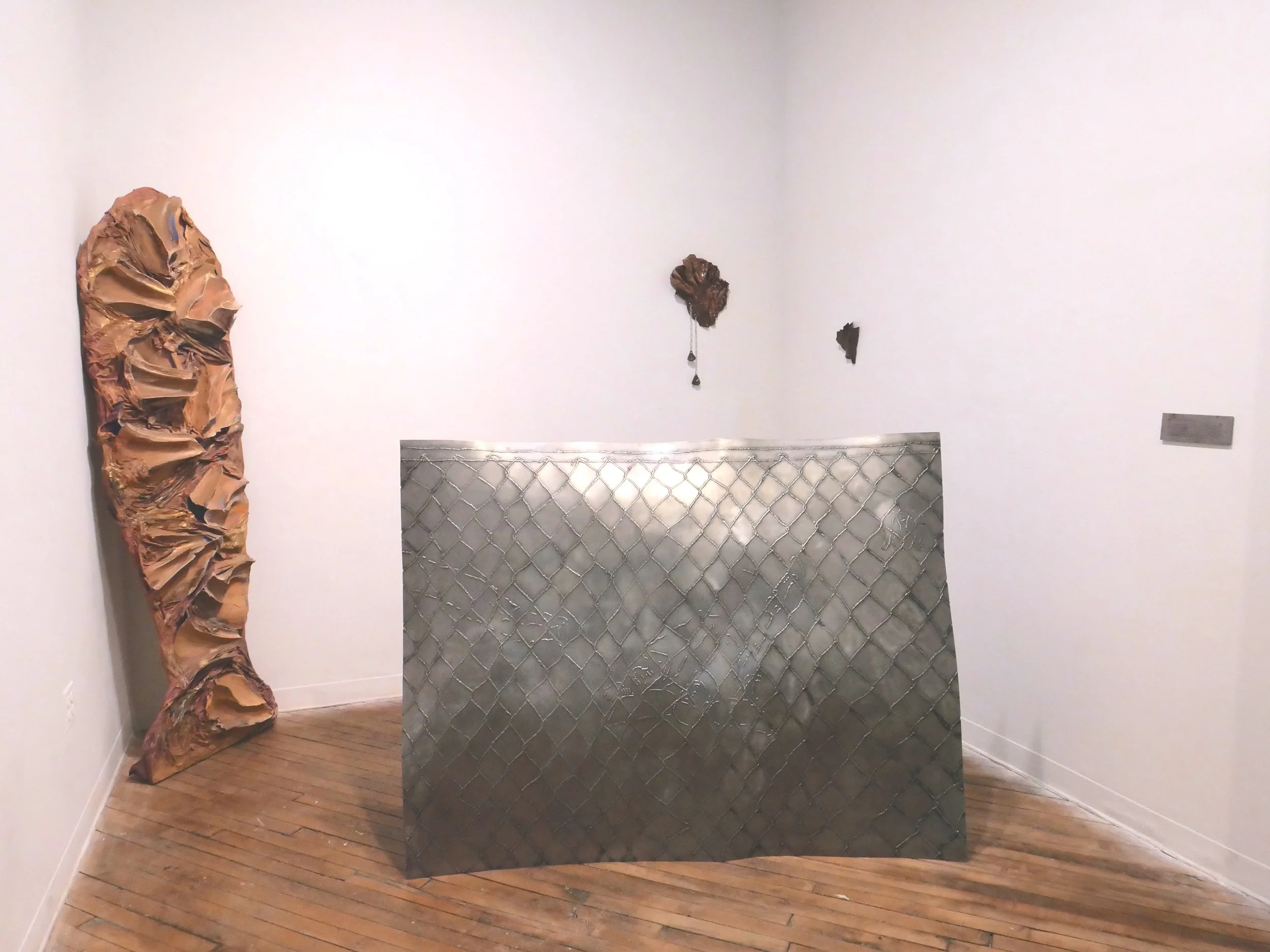
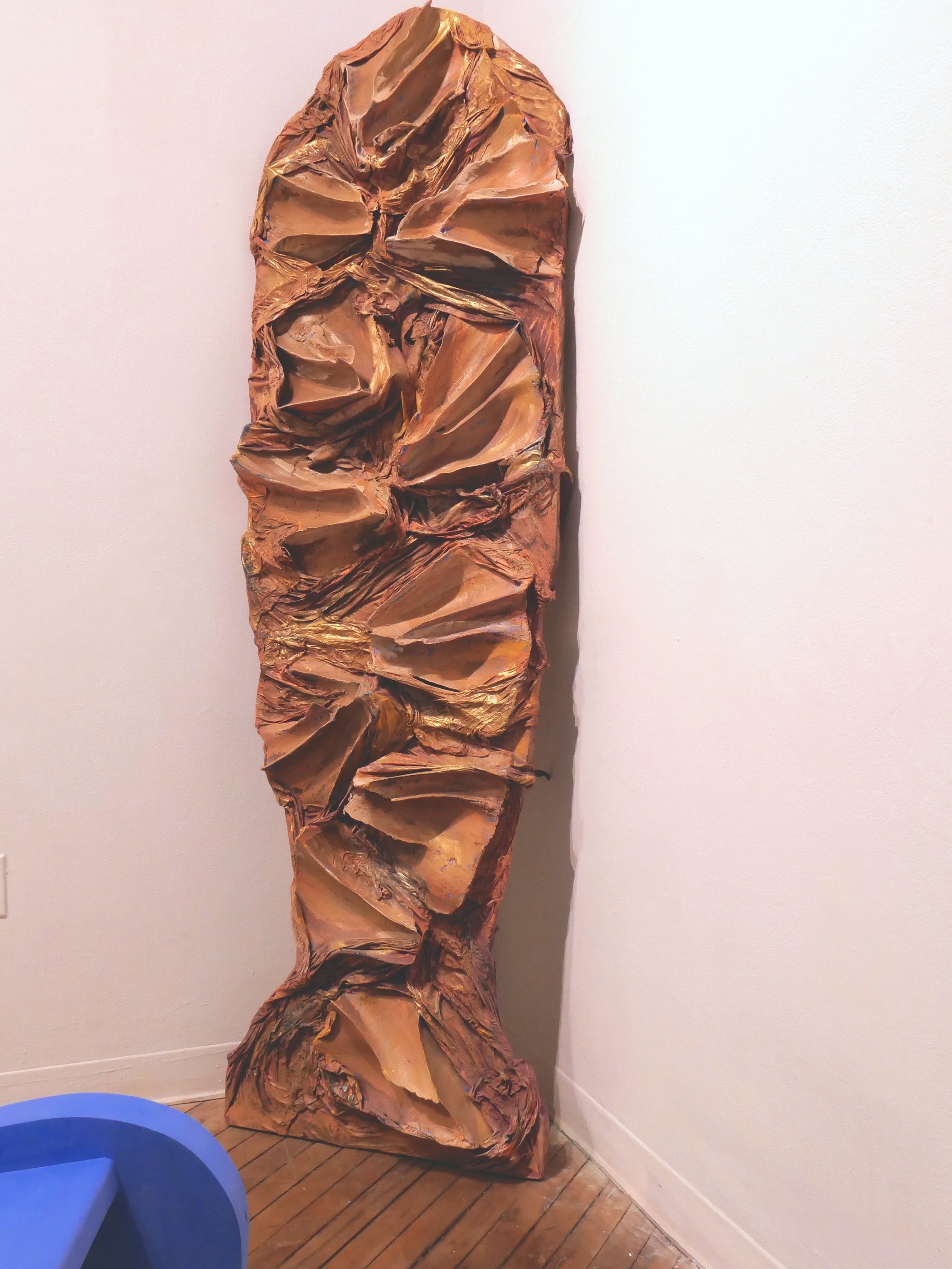
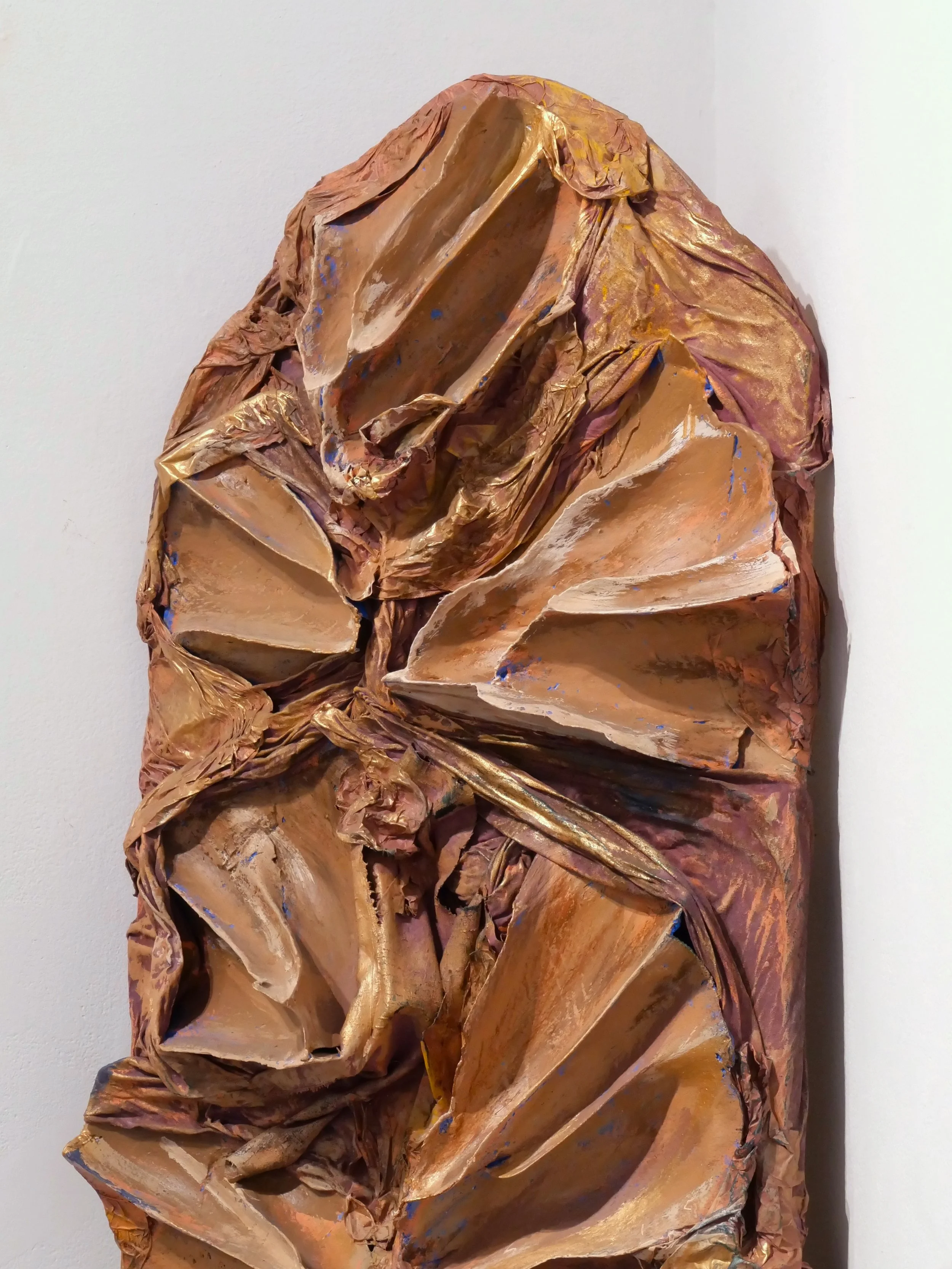
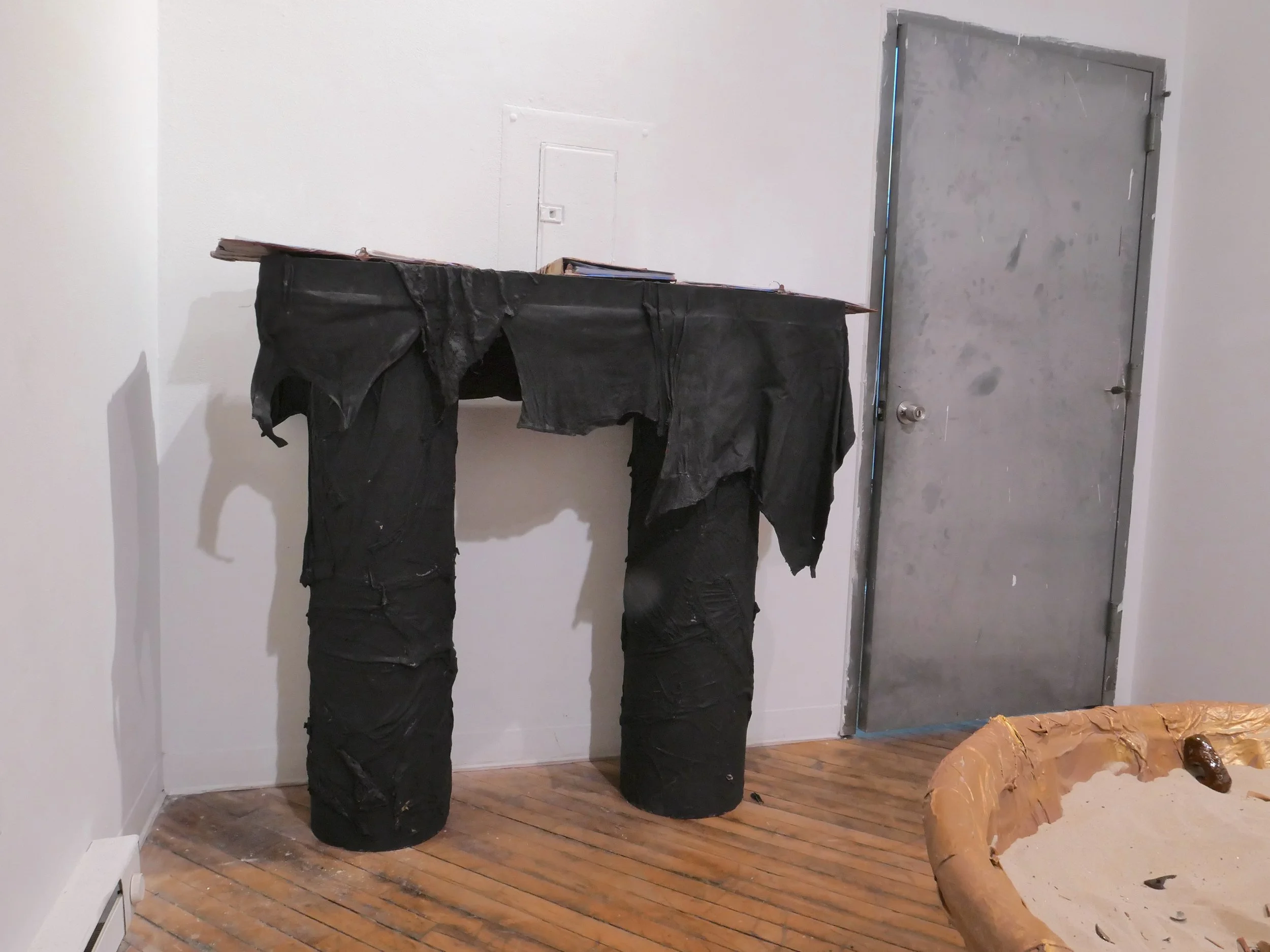
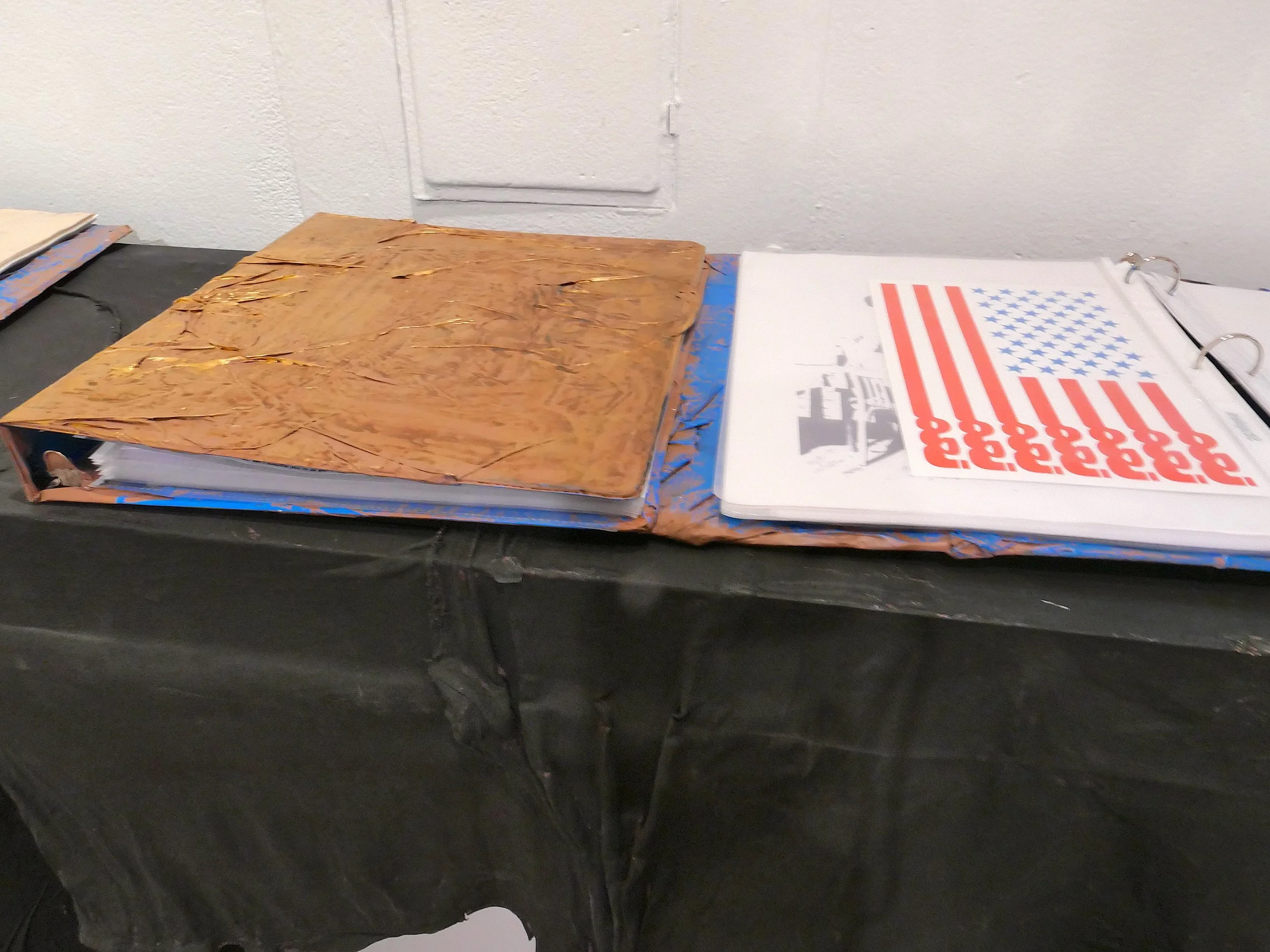
What will remain of the present once it becomes the past? How do we share our stories when we are no longer here? What clues stay alive to make sense of our experiences? Artists Kt Abadir-Mullally and Paolo Mentasti explore the fields of archaeology, material culture, and the preservation of memory through their exhibition Dust Collectors. Centering storytelling as a core element of their practice, they create contemporary artifacts that respond to everyday life by channeling knowledge from the past into new forms. Their works investigate how cultural histories are remembered, preserved, and reimagined, drawing attention to the markers of humanity in the present while ensuring these stories endure across time. In confronting the legacies of imperialism and colonization, Kt and Paolo reclaim agency for cultural narratives that have been marginalized or deliberately erased, allowing them to live again through material forms that bridge past and present.
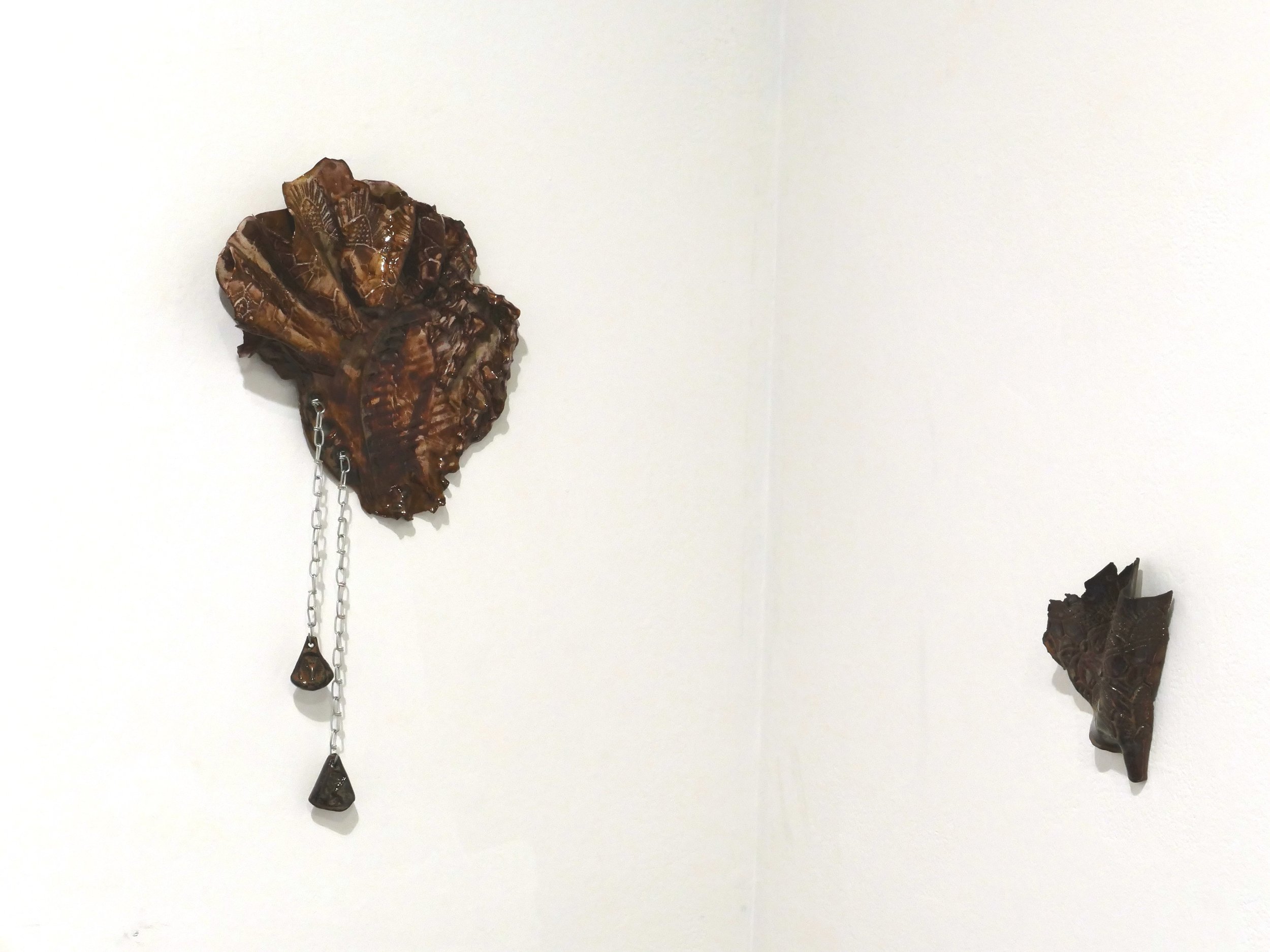
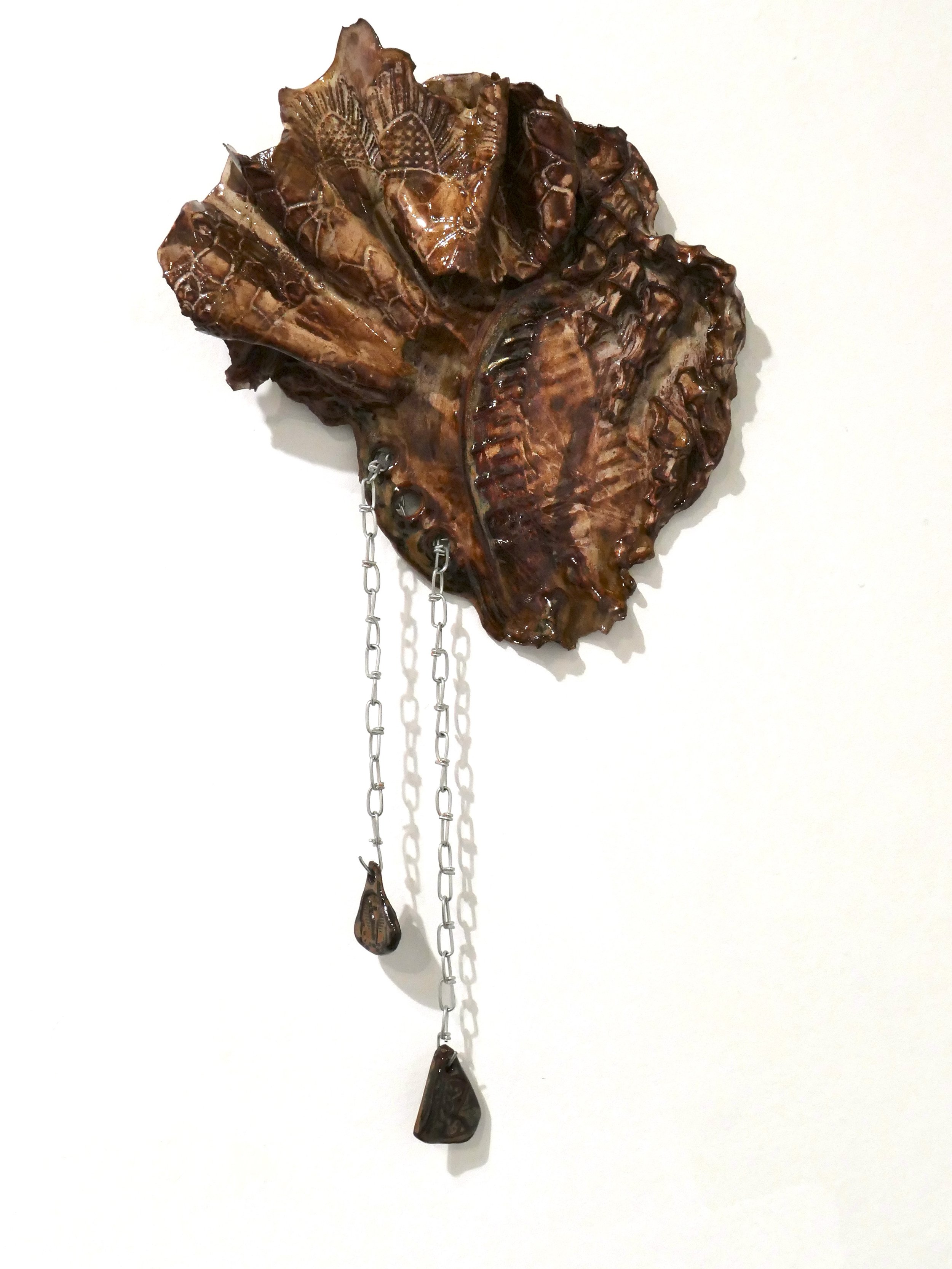
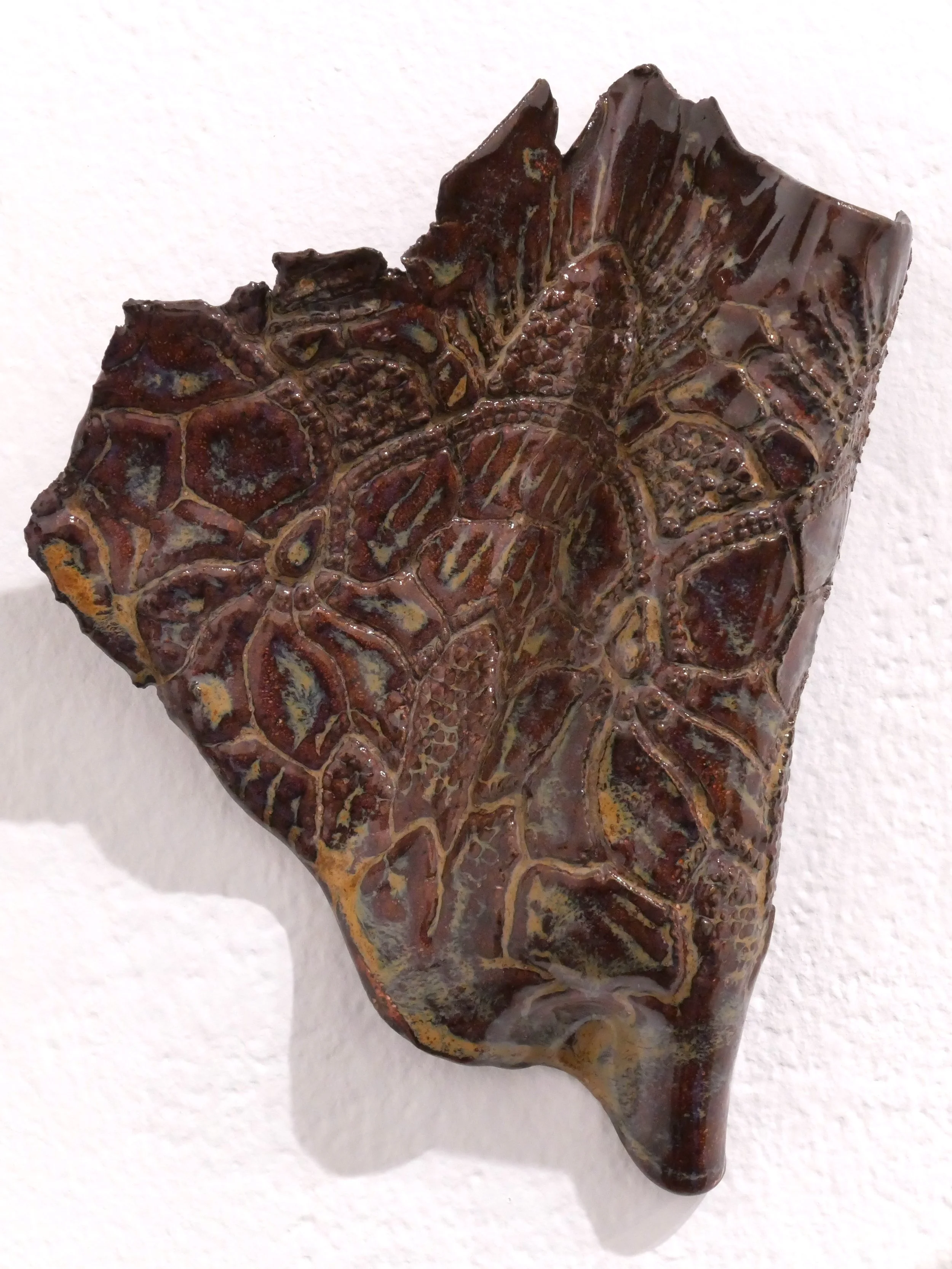
Abadir-Mullally’s practice examines archaeology and material culture through the lens of human rights, memory, and cultural reclamation. Drawing from the visual language of ancient Egypt, their work confronts the long history of imperialism and Orientalism that has shaped how Egypt has been represented in the Western imagination. For centuries, Egyptian history has been extracted from its local contexts and reframed through colonial narratives that privilege empire, spectacle, and archaeological possession over the lived experiences of its people. Museums, excavations, and popular culture have often reinforced these perspectives, presenting Egypt as a civilization to be consumed rather than a culture with ongoing, evolving histories.
Rather than reproducing these imperial narratives, Abadir-Mullally reclaims this visual vocabulary to center stories that have historically been overlooked or erased.
Their contemporary artifacts imagine how queer identities, nostalgia and histories might be archived within material culture, emphasizing the ways objects can store, protect, and pass on information long after their makers are gone. By expanding the archaeological record to include narratives that have too often been excluded from official archives, Kt challenges viewers to reconsider whose stories are preserved, who has the authority to tell them, and how material culture can become a site of resistance against systems of erasure. In doing so, Kt transforms the language of archaeology from a tool historically entangled with empire into one that advocates for cultural sovereignty, human rights, and the preservation of marginalized histories.
Paolo Mentasti's practice explores how material culture can communicate the experiences of contemporary life across time. Working through the framework of archaeology, he creates speculative artifacts that materialize the present as though it were already part of the distant past. His sculptures ask how future generations might interpret the objects, tools, and infrastructures we leave behind, revealing the social, political, and environmental conditions that define our lives today. By forging an imagined archaeological record, Mentasti transforms everyday experiences into future relics, using material as a vessel through which memory, history, and human experience can endure beyond the present moment.
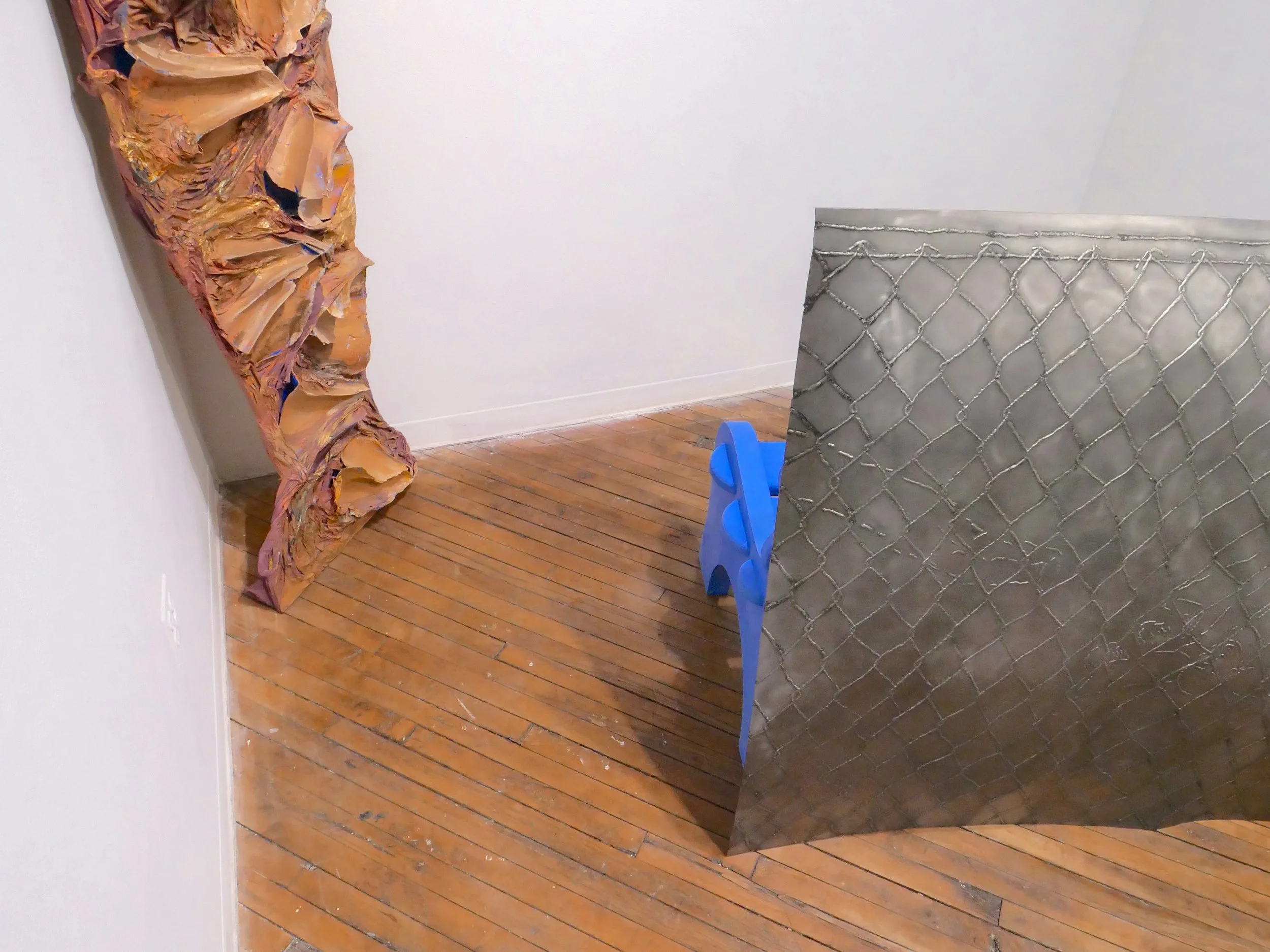
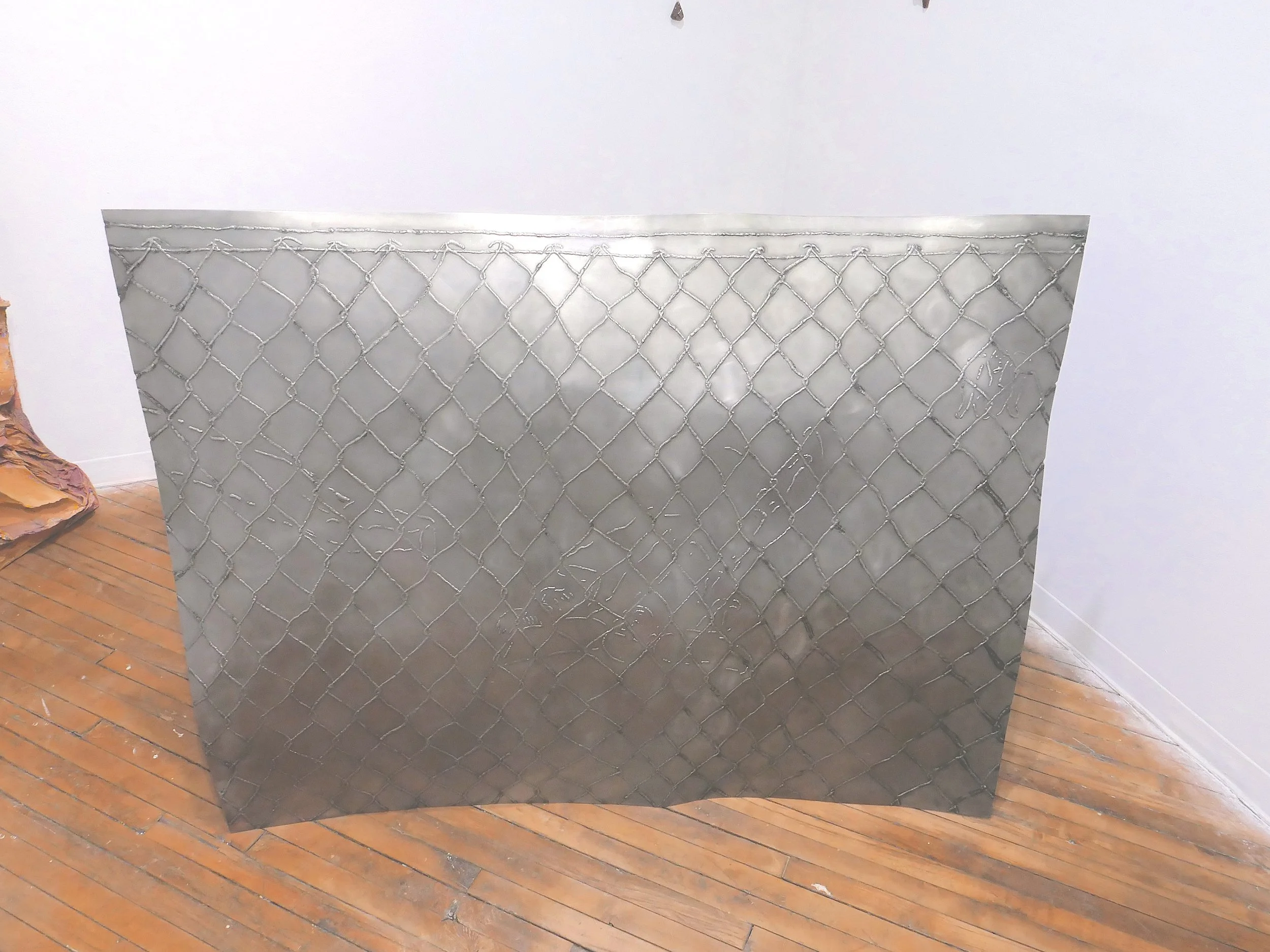
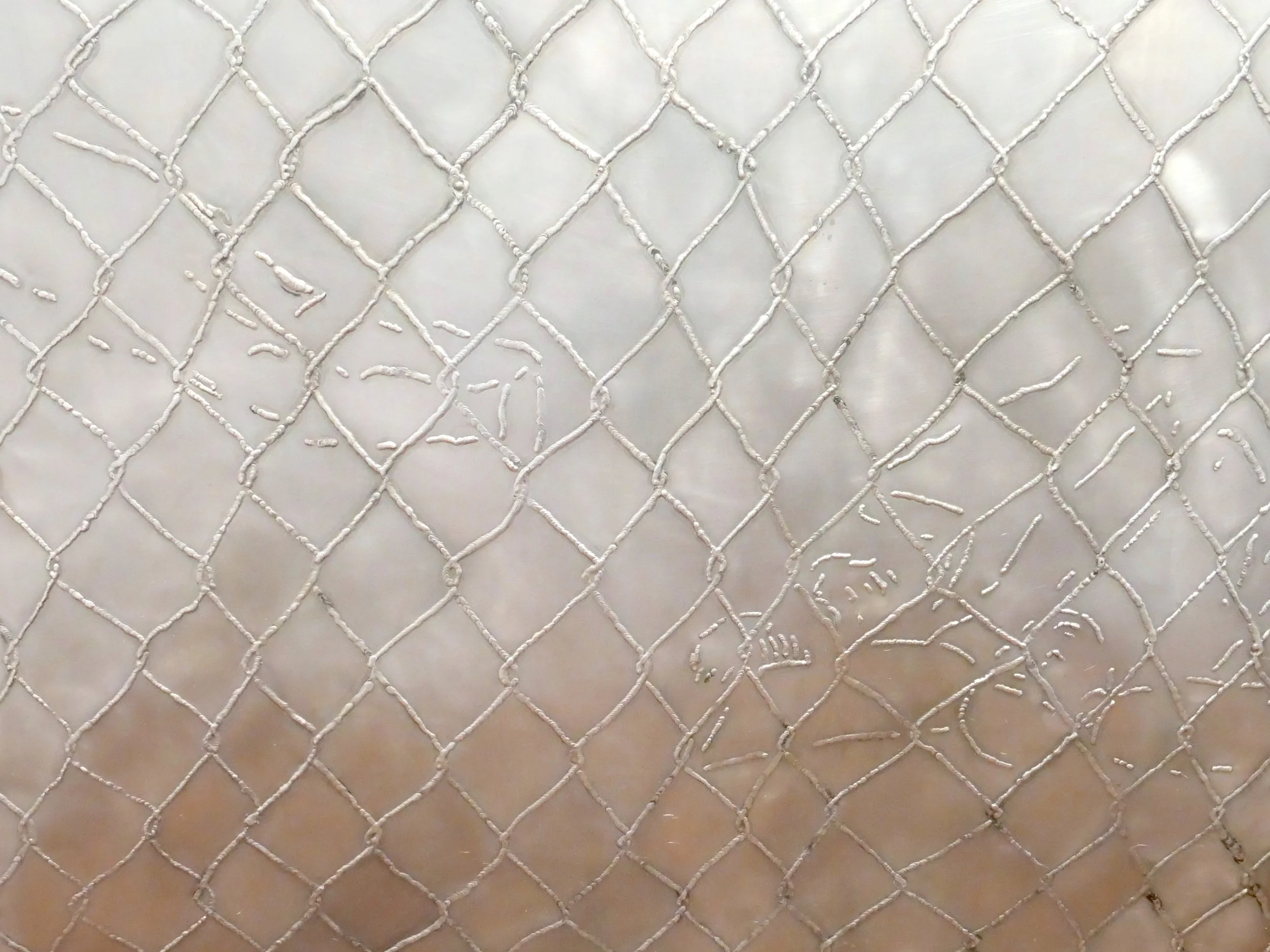
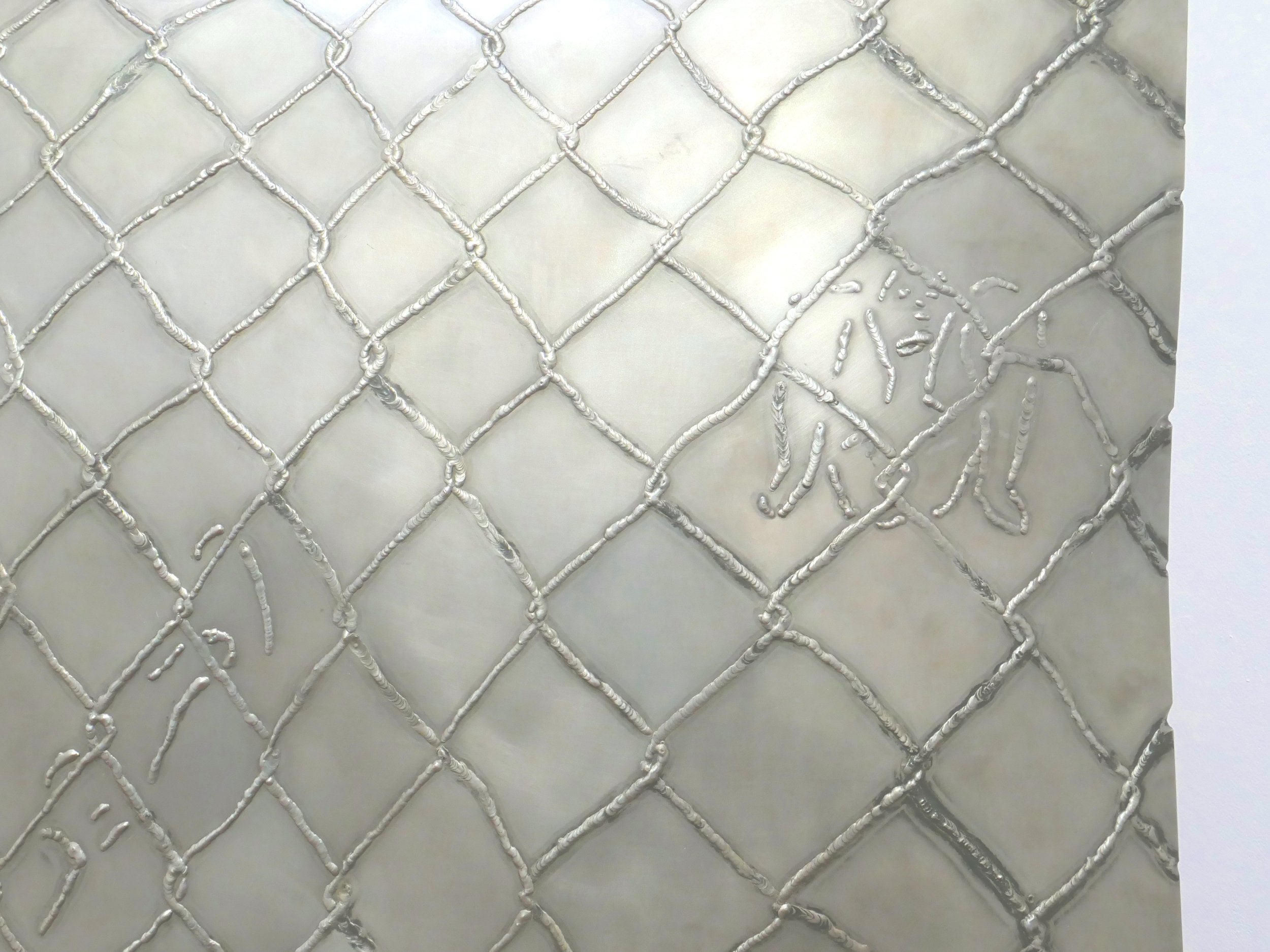
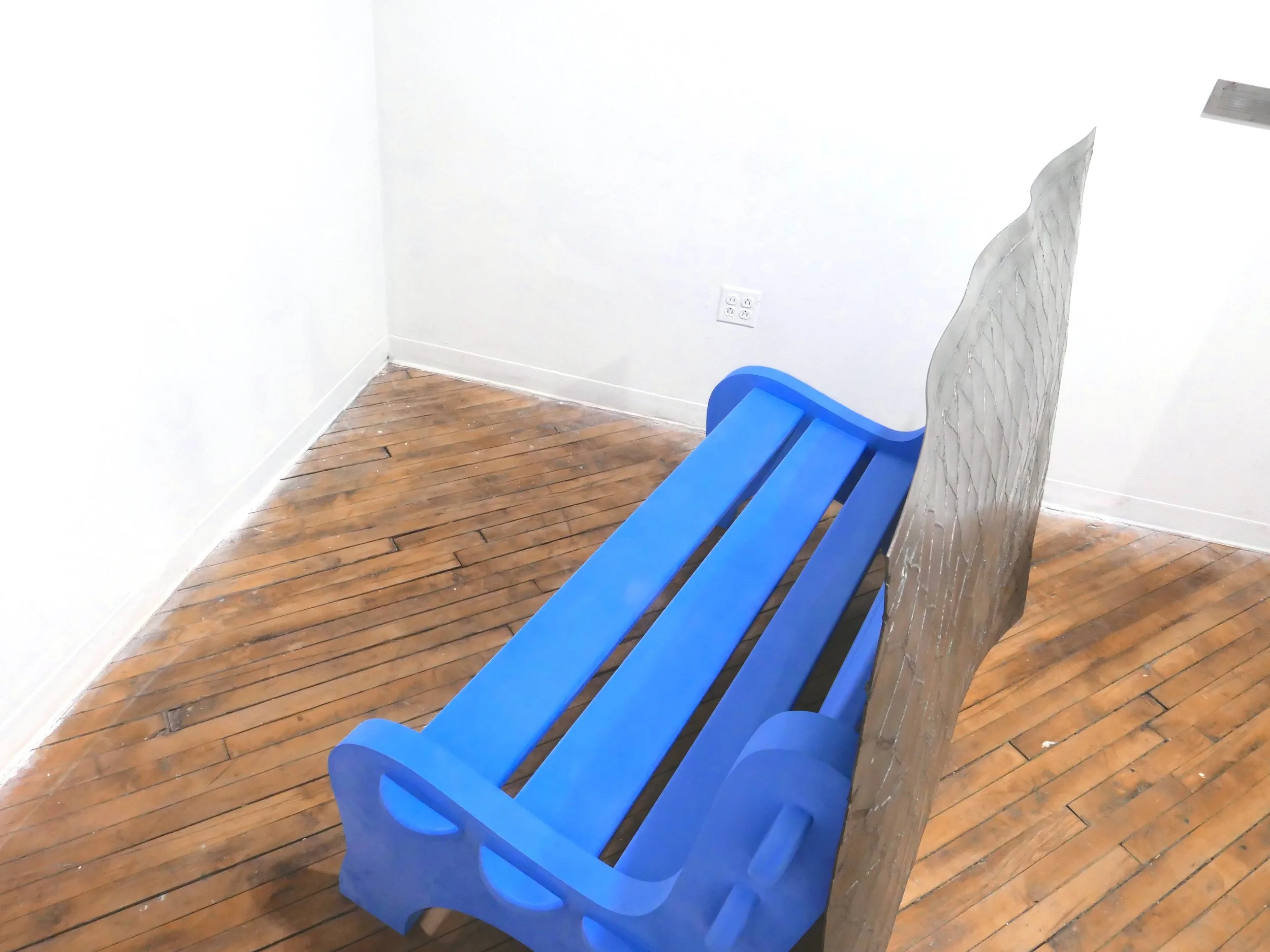
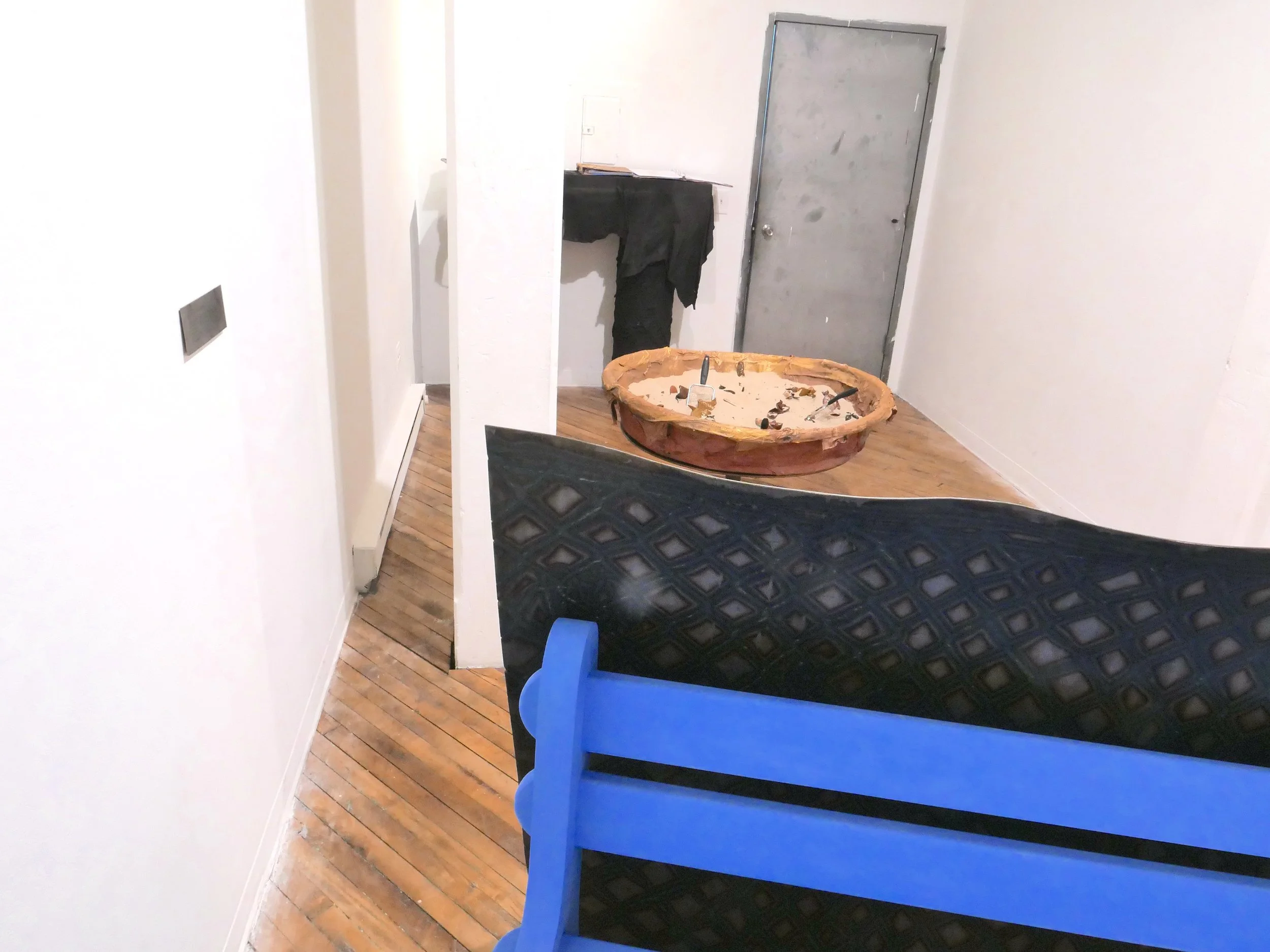
In this work, Mentasti dissects the imperial histories embedded within migration and the construction of borders. A bench offers a place of rest and refuge, while its reverse is paired with a sheet of metal functioning as a barrier, evoking the architecture of fences designed to exclude, contain, and divide. Referencing the "Remain in Mexico" policy, the installation speaks to the experiences of migrants forced to wait in precarious and often dangerous conditions while their legal status is determined by state and imperial powers. The juxtaposition of polished metal with the bright blue wooden bench exposes the unequal realities experienced on either side of a border, revealing how infrastructures of exclusion are also infrastructures of care denied. Rather than presenting migration solely as a contemporary political issue, Mentasti frames borders as future archaeological sites—material evidence of the ways nations define belonging, regulate movement, and inscribe power onto the landscape. His work asks what future generations will learn about our present from the objects we leave behind, and whether they will recognize these structures as monuments to protection or to exclusion.
Dust Collectors also raises questions about preservation and the ways we choose to archive memory. Digital archives have expanded access to art, allowing people around the world to engage with works without being physically present. Yet this accessibility depends on technological infrastructures that require immense resources to maintain and remain vulnerable to obsolescence. Physical archives present a different paradox. While museums preserve objects for future generations, countless works remain hidden in storage, removed from public view and effectively disappearing despite their continued existence. Abadir-Mullally and Mentasti’s work proposes another form of preservation—one rooted not solely in the survival of objects, but in the transmission of stories. Rather than placing value only on an object's physical longevity, their works invite viewers to carry these narratives forward through memory, conversation, and lived experience. In this way, the act of remembering becomes its own archive, allowing the objects to take on new life through the people who encounter them.
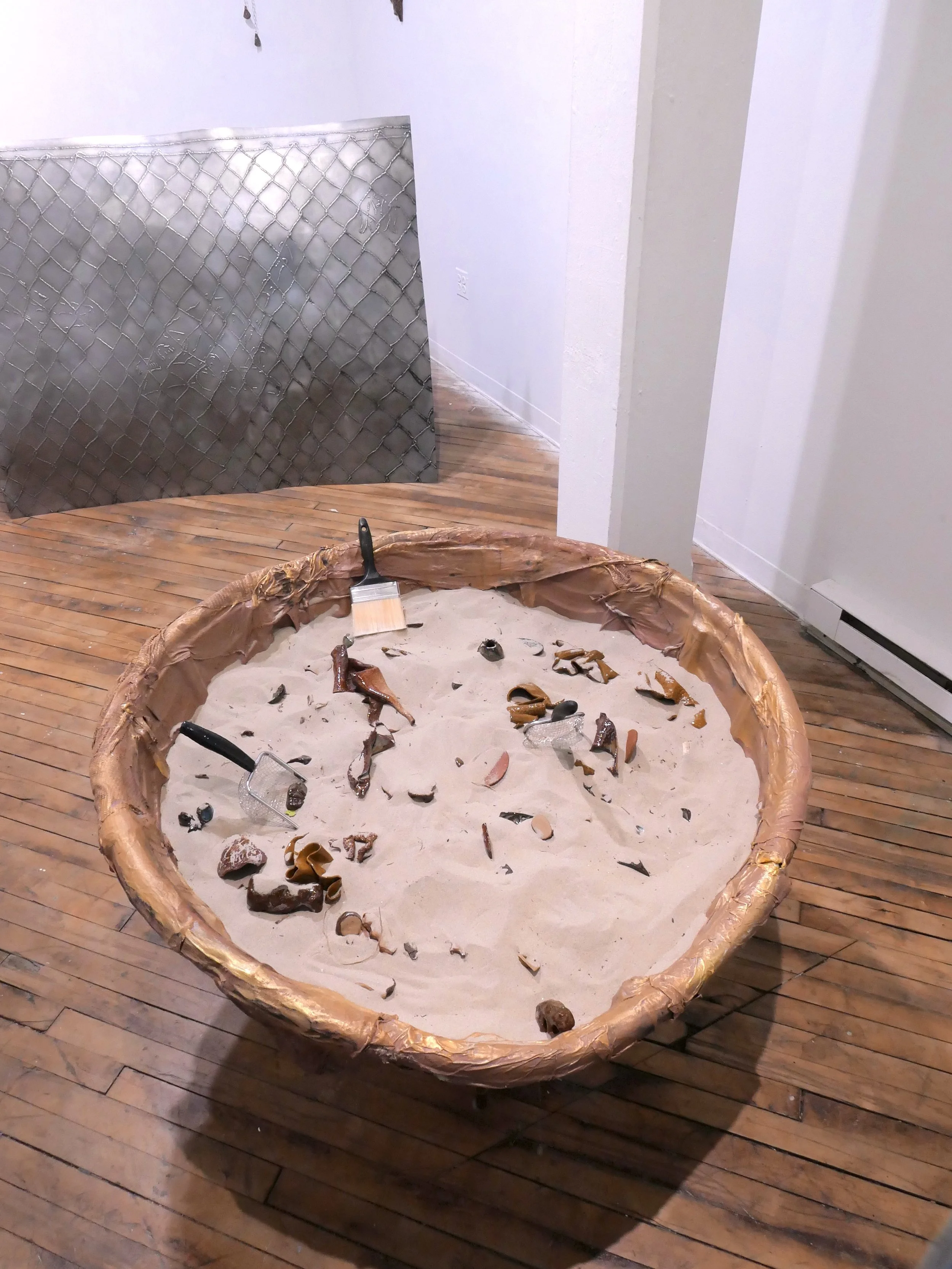
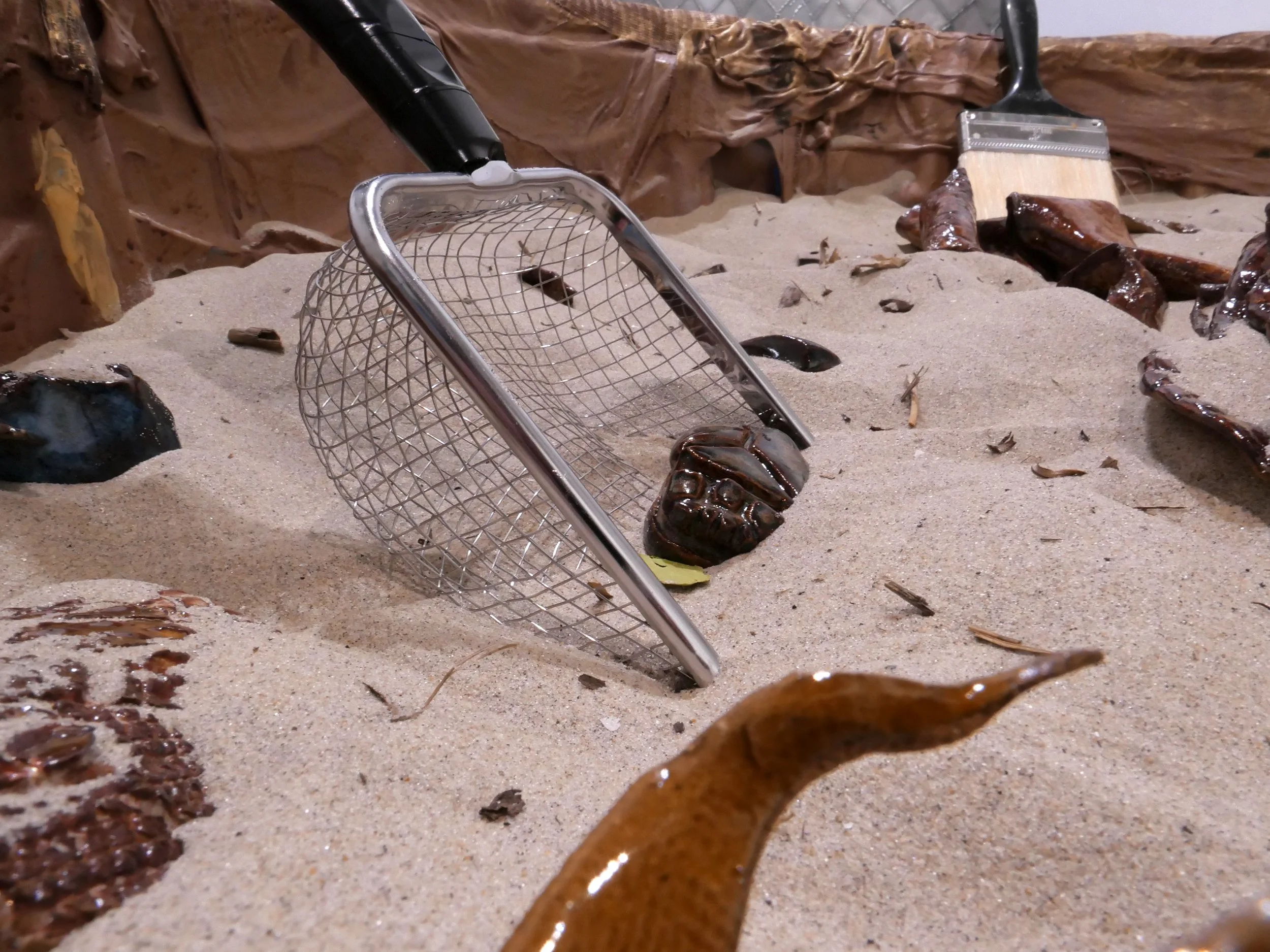
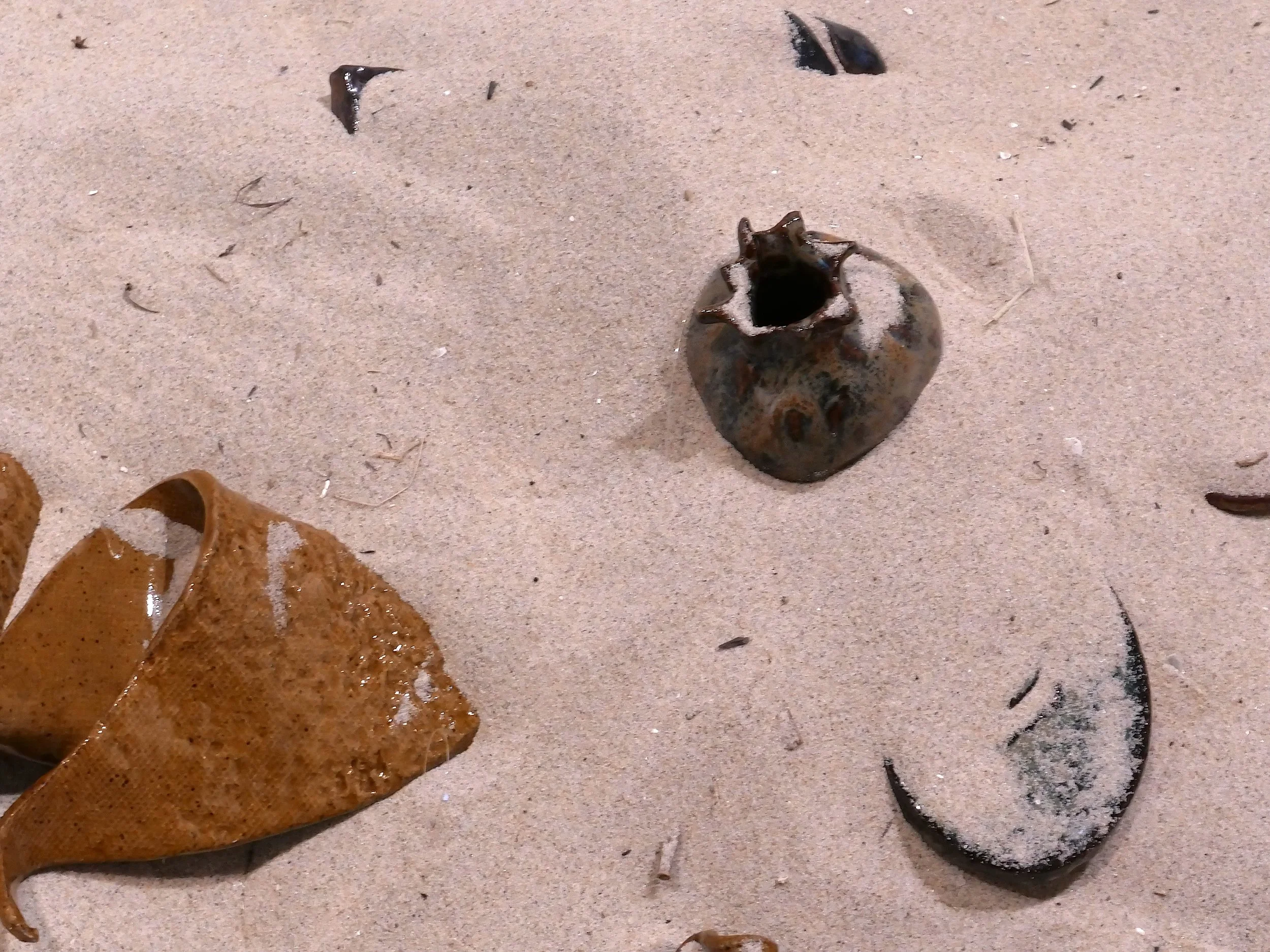
As part of Dust Collectors, the participatory activity Back Dirt extended these conversations around archaeology, material culture, and discovery. During the event, participants buried and later excavated objects created by Kt and Paolo, transforming the audience into archaeologists tasked with interpreting an imagined material record. Many of the buried objects were made from natural materials—ceramic figures depicting human experiences or discs formed from dough—which, if left undiscovered, would gradually decompose and return to the earth. Their impermanence recalls the organic life cycle of clay itself, a material whose history is rooted in both creation and eventual return. Alongside these ephemeral objects, a time capsule introduced materials intended to endure, prompting participants to consider what future generations might learn from the traces we leave behind. What survives is inseparable from the material culture of a society: organic materials disappear while metals, plastics, and other industrial materials often outlast the people who made them. Yet the significance of these remnants lies not only in their survival but also in the stories they communicate. The objects excavated during Back Dirt demonstrated that material culture is always interpreted through the present, inviting participants to reconsider how meaning is constructed through discovery, touch, and the act of looking anew.
Dust Collectors ultimately suggests that archaeology is not only the study of the past, but also an act of imagining the future. Every object becomes a question rather than an answer, carrying with it the possibility of multiple histories, interpretations, and memories. Through their practices, Kt and Paolo remind us that material culture is never neutral; it reflects the values, systems of power, and lived experiences of the people who create it. Whether confronting the legacies of empire, preserving queer histories, or examining the politics of migration and borders, their works ask us to consider not only what will survive us, but what stories those remnants will be able to tell. In the end, Dust Collectors propose that preservation is not measured solely by the endurance of objects, but by the endurance of the narratives they carry. The exhibition
invites us to become both archaeologists and storytellers, recognizing that the future's understanding of our present will depend as much on the memories we choose to share as on the artifacts we leave behind.
Moe Marte is an art handler and art historian based in Philadelphia. Their work combines hands-on experience in the care and movement of artworks with research on cultural memory, ethics, and migration in the Caribbean and the Levant. Their art practice focuses on the preservation of ancestral memory through rhythm and movement, while also exploring how artworks carry ritual, knowledge, and identity—not only as physical objects, but as expressions of social and historical meaning.